Top 10 Best Universities for PhD Studies in Europe in 2026

Photo by cottonbro studio
A PhD is more than just a degree, it’s a chance to dive deep into a subject you’re passionate about and contribute new knowledge to your field.
If you enjoy exploring complex ideas, conducting research, and working independently, pursuing a PhD in Europe can be a great option. The continent is home to some of the world’s leading universities, strong research environments, and a wide range of funded PhD opportunities across many disciplines. These programmes are also very international, with many English-taught options and diverse research teams.
But with so many universities and programmes available, choosing the right one can feel overwhelming. Which institutions offer the best research support? Where can you find funded PhD positions? And which universities are best for international students?
Find PhD Programmes in Europe Taught in English
When choosing where to do a PhD, the most important factors are finding the right research topic and academic environment that matches your interests. A well-known university such as the University of Oxford, University of Cambridge, and EPFL can help, but what really matters is whether there are strong research groups and experts in your specific field.
To help you get started, the list below highlights some of the best universities for PhD studies in Europe, giving you a solid starting point to explore potential programmes, research areas, and supervisors.
| University | Country | Degree Type |
|---|---|---|
| Business School Lausanne (BSL) | Switzerland | 2 Doctorates of Business Administration |
| Central European University (CEU) | Austria | 11 Self-funded Doctoral programmes |
| EU Business School | Switzerland | 1 Doctorate of Business Administration |
| ETH Zurich | Switzerland | 16 Highly competitive doctoral studies |
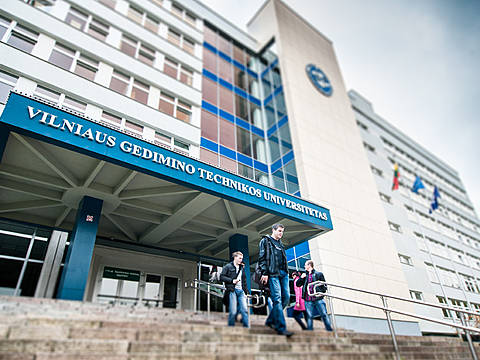
| Kaunas University of Technology (KTU) | Lithuania | 21 State-funded PhD programmes |
| Technical University of Munich | Germany | Multiple paths and funding options |
| University of Kent | United Kingdom | 80 PhD degrees |
| University of Szeged | Hungary | 19 Doctoral programmes |
| University of Helsinki | Finland | 14 PhDs programmes |
| University of Pécs | Hungary | 19 Doctorate degrees |
Choosing a PhD in Europe is different from picking a Bachelor’s or Master’s degree. Here are the key things to consider:
Many European universities offer PhD programmes fully taught in English, making them accessible to international students. Whether you’re interested in technology, the sciences, humanities, or social research, there are plenty of options across different fields.
Disciplines with PhDs fully taught in English:
No matter your field, the skills you gain during a PhD (like problem-solving, data analysis, project management, and independent research) are highly valued across industries, giving you flexibility to pursue a career in academia or the private sector.
PhD applications in Europe usually have deadlines, but the timing and format can vary a lot depending on the country, university, and programme.
Here’s what you need to know:
Deadlines can be very early, sometimes up to a year before the PhD starts, so it’s important to check each programme carefully and start preparing your research proposal, CV, and references well in advance.
Study in Europe: Find your PhD Programme
PhDs in Europe can either be fully funded or self-funded, and the financial arrangements vary a lot depending on the country, university, and programme. In many cases, fully funded PhDs include a salary or living stipend, while in other cases, students may need to pay tuition and cover their own living costs.
PhD programmes at private universities often offer more personalized supervision, access to cutting-edge facilities, and stronger industry connections, which can give you an advantage when building your research career or moving into specialized sectors. These can also sometimes speed up your progress or give more flexibility in choosing your research topic.
Salaries and stipends can also differ significantly across Europe, so it’s important to always check each programme’s funding model carefully before applying.
Applying for a PhD in Europe is quite different from applying to a Bachelor’s or Master’s programme. Most PhDs are research-focused positions, often tied to a specific project or supervisor, rather than general academic courses. Here’s what you generally need to know:
In most countries, you’ll typically apply directly to the university or a specific research group.
Study.eu Tip: Networking matters a lot! Reach out to potential supervisors early, connect with current PhD students on LinkedIn, and ask about their experience. These connections can give you insights into the programme, supervision style, and even improve your chances of being accepted.
Many PhDs are job-style positions rather than classroom-based programmes, meaning you’ll spend most of your time conducting research rather than attending lectures. You usually apply to a specific research project rather than a general programme, and in some countries, PhD candidates are considered employees of the university or research institute, with a salary and employment benefits.
Career paths after a PhD are diverse. While some graduates continue in academic research and teaching, many move into industry, government, or specialized sectors, with industry-focused PhDs becoming increasingly common. In fact, according to Eurostat, in 2024 more than half (57.0%) of full-time equivalent researchers in the EU worked in business enterprises, 31.6% in higher education, and 10.1% in the government sector, showing that opportunities outside academia are significant.
Some countries, such as the Nordic countries, are known for having a better work-life balance for PhD candidates, with structured hours, strong support, and fair employment conditions. Meanwhile, other countries or institutions can be more competitive or intense, with high expectations, tight deadlines, and a faster pace of research.
Knowing these differences ahead of time can help you choose the right country, programme, and research environment for your goals and lifestyle, so you can focus on doing your best research without unnecessary stress.
Want to learn more?
Find Doctorate Programmes in Europe Taught in English
1493 Doctorates in Europe

.svg "Central European University (CEU)")
.svg "University of Helsinki")