Study in Ireland
World-class standards - warmest of welcomes
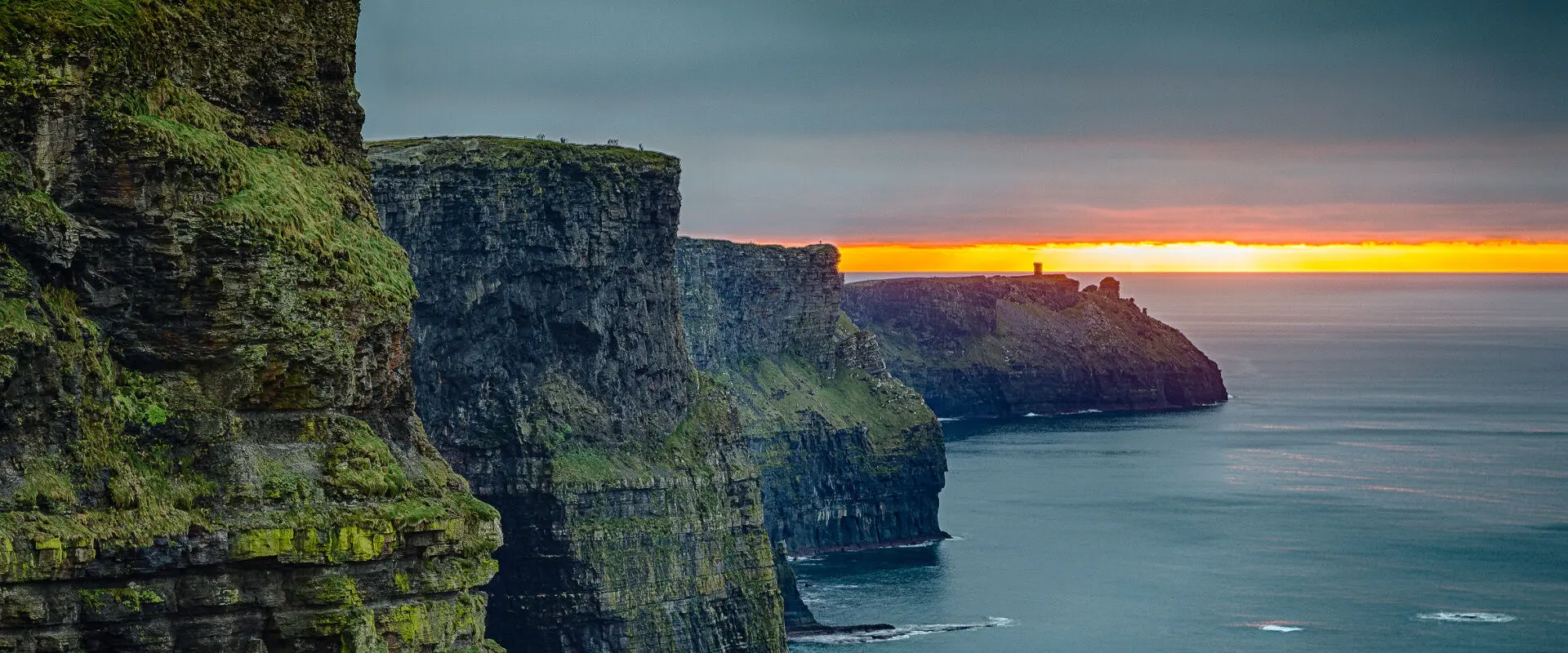
Cliffs of Moher by Mobilus In Mobili, CC BY-SA 2.0, modified
|
Study in Ireland – Facts 
|
|
|---|---|
| Capital: | Dublin |
| Other popular student cities: | Cork, Limerick, Galway |
| Population: | 4,589,000 |
| Currency: | EUR 1 EUR = 1.14 USD |
| Listed universities: | 18 |
| Study programmes: |
1,594 Bachelors
1,371 Masters 123 PhDs |
| Ranked universities: | 9 |
| Look at study programmes in Ireland 🧑🎓 | |
Ireland is one of the most popular study abroad destinations in Europe. Its universities offer first-rate education in a traditional, yet modern setting. Thousands of study programmes at over two dozen schools attract international students from around the world.
Located in the north-western fringes of Europe, Ireland’s history is long and complicated. The first great tribes to establish themselves on this island were known as the Celts. The customs, myths, and languages of these peoples are still very important to modern day Irish citizens. While Irish Gaelic is still an official language and adorns, with English, every street and other official sign in public, it is spoken only by a minority, as everyone in Ireland today communicates in English.
During the Middle Ages, Ireland was a haven for Christian monks and scholars. St. Patrick, originally brought to Ireland as a young slave, famously converted the “Emerald Isle” to Christianity in the fifth century, and well over 70% of all Irish people identify as Roman Catholics today. On the supposed date of his death, the Irish celebrate their national holiday, St. Patrick’s Day, in Ireland and around the world.
Ireland had a long troubled history under British rule from at least the 1500s till the mid-1900s when the Republic of Ireland was formed as a separate nation. Ireland’s problems were compounded by great potato famines, high unemployment, and numerous political upheavals. In the second half of the 20th century, the conflict in Northern Ireland between republican (i.e. Irish) and unionist (i.e. British) groups grew violent. This era prior to successful progress in the peace process, in particular 1969 to 1998, is often referred to as “The Troubles”.
However, throughout it all, the Irish people never lost their tenacity and humour. When you meet people and make friends in Ireland you will soon experience their good nature and their genuine interest in other people from around the world.
People who love nature, literature, and ancient history will really enjoy studying in Ireland. The Irish people are well known for their conviviality, and many of the cities outside of Dublin work hard to preserve their rich heritage, giving you many opportunities to explore the country. Also, since Ireland is so close to the United Kingdom, you can easily travel to and/or network in major cities like London, Edinburgh, and Glasgow.
Ireland is home to some of the finest universities in the world. Some of the key fields Irish universities specialise in include the natural sciences, technology, economics, and the humanities. Across Ireland, there are two dozen universities and institutes of technology to you can apply to. Getting a Bachelor’s in Ireland or Master’s in Ireland is a great experience for your professional development, but more expensive than elsewhere in Europe. Of course, how much you ultimately pay will depend on a great number of factors.
In Ireland, EU/EEA/Swiss students who qualify for the “Free Fees Initiative” can receive free undergraduate tuition and only pay the student contribution charge (around €2,500) and any applicable levy (between €100 and €150). For students who do not qualify, undergraduate and postgraduate tuition fees can range from around €2,500 to more than €30,000 per year depending on the university and programme.
Cost of living depends on the city, but you should expect to spend roughly €7,000 to €12,000 per year on accommodation, food, and other expenses.
In the past three or four decades, after becoming a member of the European Union, Ireland quickly turned from Europe’s poorhouse to Europe’s economic powerhouse. Structural reforms have led to a viable boost and attracted many multinational corporations - and especially technology companies - to set up their European headquarters in Ireland, including the likes of Google, Airbnb, Pfizer, Dell and others. Therefore, Ireland offers numerous opportunities for graduates with an international background. If you study in Ireland, you stand a good chance at finding a job and staying in the country after you graduate.
Almost all international connections to and from Ireland go through Dublin airport. There are a few smaller airports throughout the country, mostly serviced by low-cost carriers like the Irish airline Ryanair. Once you’re there, it is easy to explore Ireland by train or by bus. Crossing the country from one end to the other is manageable in less than 4 hours.
Search universities & programmes in Ireland