Top 10 Best Universities to Study Mathematics in Europe in 2026

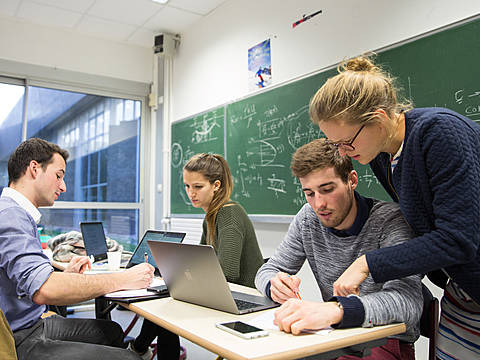
Photo by www.kaboompics.com
Mathematics is more than numbers and formulas, it’s the foundation of everything from engineering and finance to technology and artificial intelligence. With the rise of AI, data science, and machine learning, mathematical skills are in higher demand than ever, opening doors to careers in cutting-edge industries around the world.
If you’re curious about solving complex problems, analyzing data, or exploring patterns that shape the modern world, studying mathematics in Europe can be an excellent choice. The continent is home to some of the world’s leading universities, strong research programmes, and opportunities to work on real-world projects in AI, statistics, and applied mathematics.
But with so many universities offering mathematics degrees, choosing the right one can be tricky. Which schools have the strongest programmes? Where can you get hands-on experience with AI and data analysis? And which institutions provide the best career support for international students?
Study Mathematics: Find Bachelors & Masters in English
The table below highlights a selection of the best universities to study mathematics in Europe in 2026, offering English-taught programmes, modern facilities, and opportunities to work on real-world projects in areas like AI, data science, and applied mathematics.
While top schools like the University of Oxford, Cambridge, EPFL, and Université Paris-Saclay are often featured in global rankings, this list focuses on a mix of leading universities from different European countries, giving international students a wider range of options and more realistic chances of admission.
| University | Country | Degree Type |
|---|---|---|
| Chalmers University of Technology | Sweden | 1 Master of Science |
| ETH Zurich | Switzerland | Bachelors, Masters, PhDs |
| Imperial College London | United Kindgom | Undergraduate, Postgraduate |
| Kaunas University of Technology (KTU) | Lithuania | 1 Master of Science, 1 PhD |
| Saarland University | Germany | 3 Masters of Science |
| Stockholm University | Sweden | 1 Master’s degree |
| Radboud University | Netherlands | 1 Master of Science |
| Technical University of Munich | Germany | Bachelor, Master of Science |
| University of Helsinki | Finland | 1 Bachelor of Science, 2 Masters of Science |
| University of Twente | Hungary | 1 Bachelor of Science, 1 Master of Science |
If you’re interested in studying mathematics, you’ll also find several closely related degrees across Europe. Depending on your interests (whether you’re more focused on statistics, data science, applied mathematics, or theoretical mathematics) one of these alternatives might be the perfect fit.
Bachelor’s degrees:
Master’s degrees:
Europe is home to some of the world’s oldest and most prestigious universities in mathematics, offering high-quality teaching, strong research degrees, and access to cutting-edge resources. Studying in Europe gives you the chance to learn from leading mathematicians, work on innovative projects, and build a solid foundation for a wide range of careers.
Key reasons to study mathematics in Europe include:
Mathematics is a challenging subject that requires strong analytical thinking, problem-solving skills, and persistence. It’s not the easiest path, and it’s definitely not for everyone, but for those who enjoy tackling complex problems, spotting patterns, and thinking logically, it can be incredibly rewarding.
Study Mathematics in Europe: Find Bachelors & Masters
Tuition fees for Mathematics programmes in Europe can range between €5,000 and €20,000 per year for non-EU students, while EU students often pay €1,000 to €20,000 . However, at some public institutions in countries such as Germany and Austria, you will find that Bachelors and Masters are free for everyone.
Even at the higher end, these prices are generally much more affordable than studying in the US or Australia, making Europe an attractive option for high-quality, cost-effective education. Overall, the cost depends on the country, university, and level of study, so it’s important to research each programme carefully before applying.
Many universities also provide scholarships, tuition waivers, or financial aid for international students, so it’s worth checking each institution’s website for funding opportunities.
Don’t forget to factor in living costs as well. Housing, food, transport, and insurance can range from around €800 to €1,500+ per month, depending on the city you choose, so make sure to plan your budget accordingly.
Common requirements for mathematics programmes in Europe include:
It’s always a good idea to check each university’s specific requirements early, as top mathematics programmes can be competitive and may have additional prerequisites.
Study.eu Tip: Try online math challenges, data analysis projects, interactive math games like Math Playground, or contributing to open-source projects. There are also plenty of free online courses, such as Khan Academy, that can help you sharpen your skills and show universities or employers that you’re motivated and capable.
Studying mathematics in Europe can open doors to a wide range of exciting and high-demand careers. Graduates often work in fields such as data science, finance, robotics, AI and machine learning, engineering, research, and software development, giving them a versatile skill set that’s valued worldwide.
Many universities offer research projects, internships, and industry collaborations, which help students gain practical experience and build professional networks. This hands-on approach often leads to faster employment and strong starting salaries.
Employers particularly value mathematics graduates for their problem-solving, analytical thinking, and quantitative skills, which are essential in technology, finance, AI, and many other industries. Practical experience in coding, data analysis, or applied mathematics can give you an even bigger advantage in the job market.
Because outcomes can vary by degree and country, it’s a good idea to connect with alumni on LinkedIn to hear about their career paths, the types of roles they landed, and how the degree helped them succeed in their chosen field.
Want to learn more?
Study Mathematics: Find Bachelors & Masters in English
278 Mathematics Programmes in Europe


.svg "University of Helsinki")


.jpg "Top 10 Best Universities for Journalism in Europe in 2026")