Study at Justus Liebig University of Giessen
Gießen, Germany
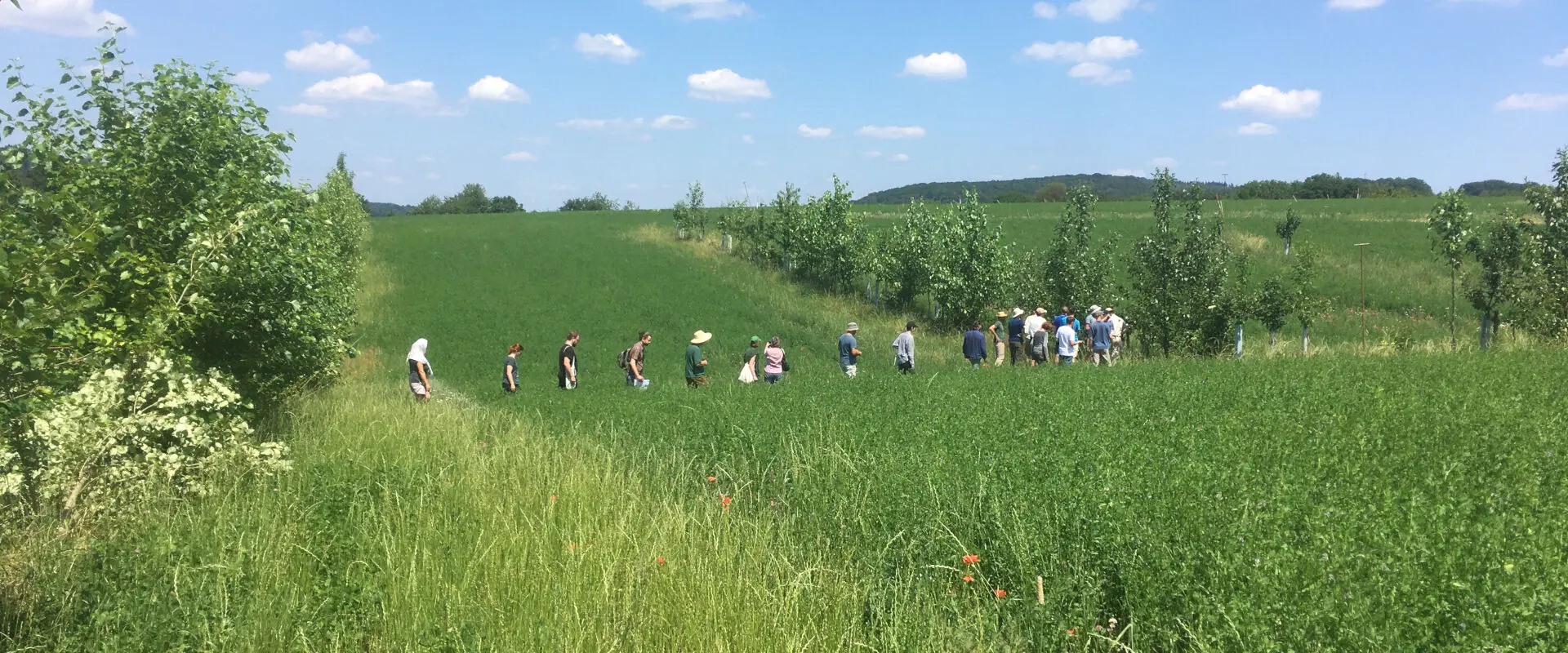
Photo by Eva Minarsch
| Programme details | |
|---|---|
| Degree: | Bachelor of Science (BSc) |
| Disciplines: |
Sustainable Development
Agriculture |
| Duration: | 3 years |
| ECTS points: | 180 |
| Study modes: | full-time |
| Delivery modes: | on-campus |
| University website: | Global Food Systems |
Request information from Justus Liebig University of Giessen
How can we ensure food security for a growing world population? How do climate change, global trade and political decisions shape what we eat? And how can sustainable food systems be designed at local and global levels?
The internationally oriented Bachelor’s programme in Global Food Systems examines food systems at the macro, meso and micro levels – from global supply chains and climate impacts to governance structures and local production systems. The programme combines natural, social and economic sciences at the interface of nutrition, agriculture, the environment and international development cooperation.
In the first semesters, you acquire fundamental knowledge in biology, chemistry, environmental and agricultural systems, as well as human nutrition in ecological and social contexts. Building on this foundation, you explore sustainable production systems, global food security, animal husbandry and food economics.
The programme links scientific theory with practical experience. You collect and analyse agricultural and nutritional data, apply basic statistical methods and deepen your understanding of intercultural communication. In the final phase of your studies the Bachelor’s Thesis provides the opportunity to carry out independent research and apply scientific methods to real-world challenges.
The study programme requires approximately 40 hours of workload per week, including preparation and follow-up. The programme is organized in modules (courses). Each module comprises four semester hours per week and is completed with a final examination.
In the first four semesters, students build up their knowledge base in a total of 20 mandatory modules (core modules). Having completed the core modules, the students are well equipped with a solid scientific education and ready to deepen their knowledge in specific research areas. By individually choosing their 8 optional modules (profile modules) from a diverse range of study areas, students shape their individual competence profile.
The programme offers a voluntary work placement that enables our students to gain an initial insight into the various areas of professional activity in which they hope to pursue in the future. The work placement also enables them to collect hands-on professional experience and establish contacts with potential employers. The variety of contacts that our faculty possesses allows us to provide expert support to students seeking a work placement.
In the final semester the students work on their Bachelor's thesis, demonstrating their ability to independently address a well-defined task within a given timeframe using established scientific methods.
Graduates of the B.Sc. Environmental Sciences have a solid background in natural sciences with a focus on quantitative analysis and environmental modelling. Their knowledge of ecology, biology, soil science, environmental chemistry and climate sciences qualifies them for positions in
The programme’s practical and analytical orientation enables direct entry into science-related professional fields or provides an excellent basis for further Master’s studies.



Visit the website of Justus Liebig University of Giessen to find out how to apply and start your study-abroad adventure in Germany! 🙌