Study.EU
Your gateway to universities in Europe

Study at Trinity College Dublin (TCD)

Dublin, Ireland
Study in Europe
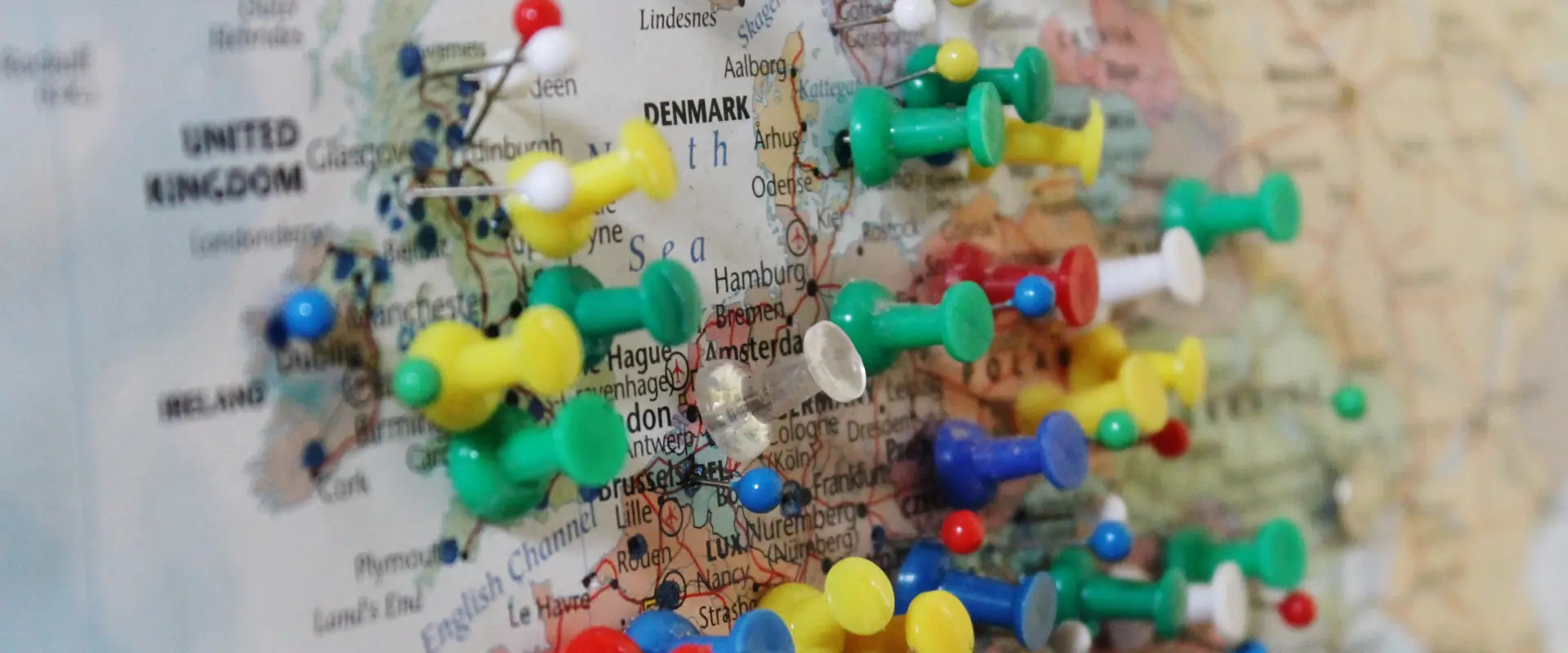
Europe by Charles Clegg, CC BY-SA 2.0, modified
  1. Study.eu
  2. Ireland
  3. Trinity College Dublin (TCD)
  4. Neuroscience: Biological and Biomedical Sciences

Neuroscience: Biological and Biomedical Sciences

Bachelor of Arts at Trinity College Dublin (TCD)

Programme details
Degree: Bachelor of Arts (BA)
Disciplines: Biology
Biomedicine
Duration: 48 months
Study modes: full-time

Request information about study programmes in Ireland  

Other students were also interested in this programme:
Bachelor of Science (Honours)
Biology with a Sandwich Year
University of Kent (United Kingdom)

Learn more now


Description:

Neuroscience

Students who wish to study Neuroscience apply to the Biological and Biomedical Sciences (TR060) and may select Neuroscience as their specialist area for the third and fourth years at the end of the second year.

What is Neuroscience?

Neuroscience is the discipline concerned with the scientific study of the nervous system in health and disease. It probes the intricate processes of the nervous system in an attempt to understand how we think, move, perceive, learn and remember. Research in the neurosciences is of considerable importance in medicine, considering the debilitating and costly effects of neurological and psychiatric disease. In this regard, a major goal of modern neuroscience research is to elucidate the underlying causes, and to produce more effective treatments for major brain diseases such as Multiple Sclerosis, Alzheimer’s Disease, Parkinson’s Disease, Schizophrenia and Depression.

Neuroscience: The course for you?

Neuroscience is an ideal topic for students who have an interest in how the brain works in health and disease. Additionally, the topic is suited to students who like approaches involving concepts and techniques from a variety of disciplines. The neuroscience degree in Trinity brings together lecturers from diverse backgrounds including psychology, physiology, biochemistry, immunology, pharmacology and genetics to deliver a truly multidisciplinary training. This diversity is also reflected in the range of laboratory projects offered during this degree, which offers students broad horizons after graduation

Do you enjoy…

  • Finding out how the brain achieves simple and complex actions?
  • Analysing evidence and developing your own hypotheses?
  • Performing experiments in the laboratory?

Neuroscience at Trinity

Trinity has a strong research focus in Neuroscience centred around the Institute of Neuroscience (TCIN) with 45 research groups and 250 researchers investigating a variety of topics related to Neuroscience. Trinity neuroscientists are well respected by the neuroscience community worldwide and regularly present at international meetings and in high impact publications. This breadth of research expertise is the driver for excellence in teaching across a range of disciplines within this degree. There is a lively research community within TCIN, including undergraduate and graduate students, postdoctoral fellows and principal investigators. The interdisciplinary character of TCIN allows for fruitful interactions between scientists of various backgrounds and this community regularly meets at seminars and social events to discuss the latest news in the field and beyond.

Graduate skills and career opportunities

Graduates in Neuroscience can expect to find employment in a wide range of areas, utilising their general scientific training as well as their specialist skills. In the past Neuroscience graduates have pursued careers in academic, government, pharmaceutical, biotechnology or medical research organisations. Some graduates study for higher degrees in neuroscience, biological or psychological research, medicine or allied health-related disciplines. For those not seeking a research or medical career, the course provides transferable experience and expertise that is suitable for a wide variety of careers, e.g. in education, business, management and industry.

Your degree and what you’ll study

Neuroscience links neurobiology with cognitive science and, as a result, modules in multiple disciplines (Anatomy, Biochemistry and Immunology, Genetics, Pharmacology, Physiology, Psychology and Zoology) are provided. The course involves in-depth instruction in the fundamentals of modern molecular and cellular biology, as well as in the structure and operation of the nervous system. Other modules focus on the development of the nervous system, its response to injury and disease, the relationship of the brain to behaviour, imaging the brain, and the drug treatment of brain disorders. You will also be trained in scientific methodology and experimental design, data handling and research skills.

Third year

The third year will cover core topics in Neuroscience including: Neuroanatomy and Development, Systems, Behavioural and Cognitive Neuroscience, Neurophysiology, Neurochemistry, Neuropharmacology, Neurogenetics and Molecular Neuroscience as well as research skills, basic laboratory skills for Neurobiology and a Trinity Elective.

Assessment

Some modules are assessed by examination; however some modules are assessed entirely by in-course assessment and some are assessed by a combination of in-course assessment and examination. Written examinations are part of the final year exams. Third year Neuroscience results constitute 30% of the final Moderatorship result.

Fourth year

The final year will examine some more specialised areas of Neuroscience and examine others at a more advanced level. Topics will include Neuropsychology, Neurochemistry, Neuropharmacology, Developmental genetics, Neuroimmunology and Neurodegeneration, Neuropsychiatric Genetics and Clinical Neurosciences. There will be a focus on scientific literature skills with a literature review and journal clubs and students will also carry out a major Capstone research project in one of the many research groups in the schools that contribute to the Neuroscience degree.

Assessment

Modules are assessed by continual assessment based on written assignments, oral presentations and literature reviews and written examinations. The Capstone research project is graded according to student performance in the laboratory and their dissertation.

Study abroad and internship opportunities

Students may arrange to study abroad during their third year following discussion with staff. Students are also facilitated in seeking internships, in Ireland or abroad, during the summer and some opportunities exist for research laboratory placements within the university.

Students may arrange to study abroad during their third year following discussion with staff. Students are also facilitated in seeking internships, in Ireland or abroad, during the summer and some opportunities exist for research laboratory placements within college.


Learn more about Bachelors in Biology

You are interested in study programmes like this one? Fill in your details to receive information about studying Biology in Ireland or elsewhere in Europe:

Are you a national of this country? If yes, simply submit the form again to confirm.

Please double-check the form inputs and then submit again.

Working... Submitting request...

Your request has been submitted!


Copyright © 2021 Study.EU


Imprint · About Study.eu · Privacy Policy · Jobs
Press

Advertise on Study.eu
Study in Europe:
Austria
Belgium
Czech Republic
Denmark
Estonia
Faroe Islands
Finland
France
Germany
Greece
Hungary
Iceland
Ireland
Italy
Latvia
Liechtenstein
Lithuania
Malta
Netherlands
Norway
Poland
Portugal
Romania
Russia
Spain
Sweden
Switzerland
United Kingdom
Recent articles:

Study Biomedicine or Biomedical Sciences: All you need to know

FAFSA: Eligible universities & colleges in Europe

US students: How to use FAFSA for a degree in Europe

What is the European Credit Transfer System (ECTS)?

Guide: the UK Post-Study Work Visa for graduates

Study.EU has been mentioned in numerous news publications worldwide, such as:
L'Étudiant (France)
Frankfurter Allgemeine (Germany)
The Standard (Hong Kong)
The Independent (UK)
Al-Masry Al-Youm (Egypt)
Le Monde (France)
The Local (Europe)
Forbes (USA)
Cookies & analytics help us deliver our services. Privacy policy