Study.EU
Your gateway to universities in Europe

Study at Trinity College Dublin (TCD)

Dublin, Ireland
Study in Europe
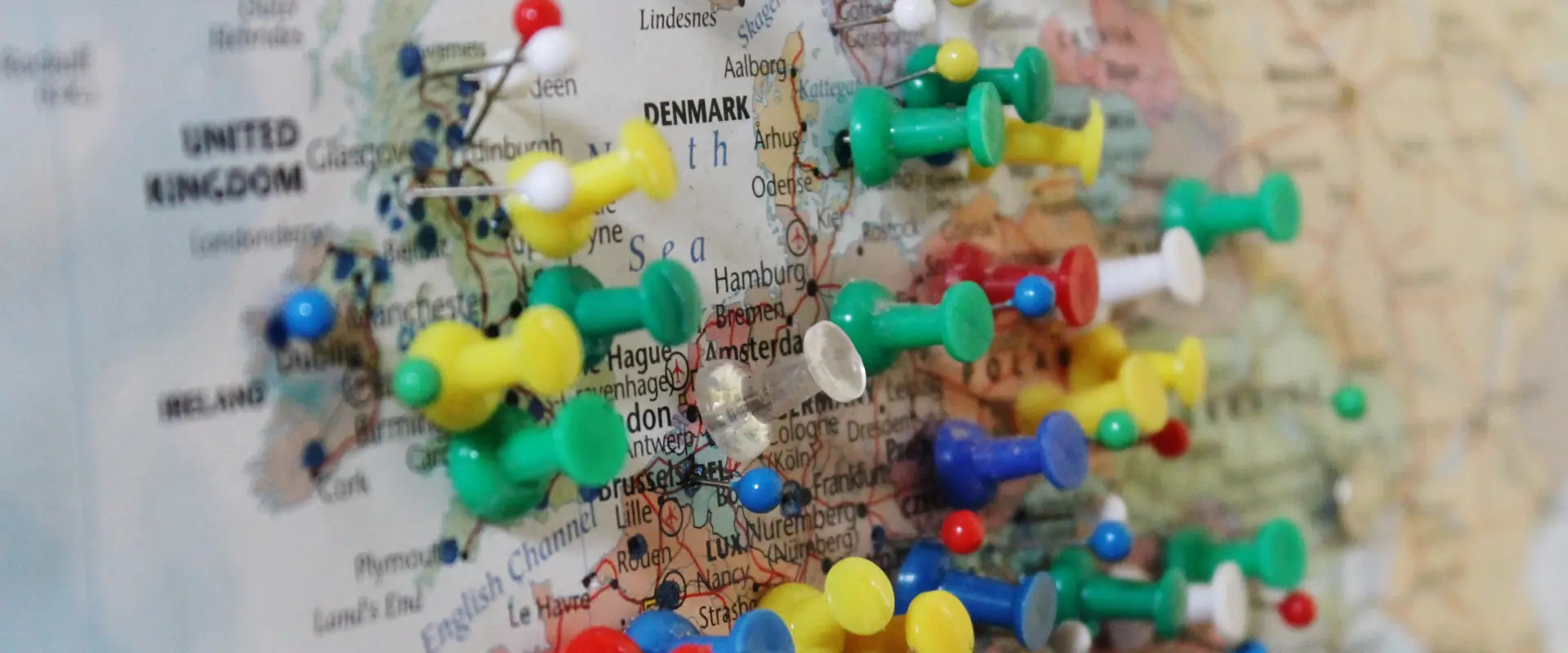
Europe by Charles Clegg, CC BY-SA 2.0, modified
  1. Study.eu
  2. Ireland
  3. Trinity College Dublin (TCD)
  4. Nanoscience: Chemical Sciences

Nanoscience: Chemical Sciences

Bachelor of Arts at Trinity College Dublin (TCD)

Programme details
Degree: Bachelor of Arts (BA)
Discipline: Chemistry
Duration: 48 months
Study modes: full-time

Request information about study programmes in Ireland  

Other students were also interested in this programme:
Bachelor of Science
Chemistry and Biotechnology
Jacobs University Bremen (Germany)

Learn more now


Description:

Nanoscience

Students who apply to the Chemical Sciences Stream (TR061) may select Nanoscience as their specialist area for the 3rd and 4th years at the end of the second year provided they take Physics as their approved modules in the first two years. It is also possible to enter Nanoscience through the Physical Sciences stream (TR063).

What is Nanoscience?

Creation of new technologies and devices would not be possible without mastery of advanced materials at the nanoscale. Making devices at the nanoscale can reduce energy costs while increasing speed or adding functionality. Nanodevices may behave in novel ways, not simply miniature versions of macroscopic devices. Nanoscience incorporates applications in energy conversion and storage, photonics, medical diagnostics, ultra-fast electronics and other areas including polymers, lasers, and optoelectronics, and industries such as electronics, telecommunications, healthcare and aerospace. Students in Nanoscience learn the basic physics and chemistry underlying these applications and how they relate to these applications and industries.

Nanoscience: The course for you?

If you enjoy laboratory work and have the desire to apply your scientific skills to the latest technologies that shape our world, then this may be the course for you.

Nanoscience at Trinity

Studying Nanoscience at Trinity offers you the opportunity to learn from world-leading experts based in the Schools of Physics and Chemistry, and in CRANN (Centre for Research on Adaptive Nanostructures and Nano devices), which is Ireland’s research centre for nanoscale materials. This degree will teach you how to use and apply principles of chemistry and physics to solve practical problems associated with the development of new technologies and their application to nanoscience.

Do you enjoy…

  • Carrying out laboratory experiments and analysing your data?
  • Getting to grips with the latest research in Nanoscience and its impact on technology?

Your degree and what you’ll study

In the first two years you study Chemistry, Physics and Mathematics. There are tutorials on historical and modern aspects of Nanoscience and Materials Science from leading experts based in the Schools of Physics and Chemistry. The Physics course includes topics in Astrophysics, Statistics, Mechanics, Thermodynamics, Electricity, Acoustics and Optics, Nuclear Physics and Quantum Physics. The Mathematics course includes topics in Calculus, Linear Algebra, Fourier Analysis and Mechanics. Students spend three hours per week in experimental or computational laboratories. You will learn transferable coding skills through the Python programming language.

In the third year you spend one day per week in the Nanoscience experimental laboratory where you are introduced to a wide range of techniques for chemical synthesis, preparation and characterisation of nanoscale materials. Some laboratory training is provided in CRANN using state of the art facilities.

Third year modules

Quantum Mechanics, Molecular Thermodynamics and Kinetics, Solid State Materials Chemistry, Analytical Methods, Electromagnetism, Semiconductor Physics, Magnetic Materials.

Fourth year modules

Photonics, Materials for Electronic and Optoelectronic devices, Computer Simulation, Materials Growth Techniques, Semiconductor Devices.

If you would like more detailed information on the modules offered, see: www.tcd.ie/nanoscience/undergraduate

Study abroad

You may undertake your fourth year project at a research institute or university in the EU or further afield, provided you attain a sufficient standard in the third year examinations. Recent examples of laboratories where projects have taken place include the IMEC micro- and nano-electronics research centre in Leuven, Belgium; The Scripps Research Institute, La Jolla, California; the University of Alberta, Canada, the University of Wollongong, Australia, and the University of Potsdam in Germany.

Further information on the year abroad programme for second or third year students, and a list of partner universities, can be found at: www.tcd.ie/study/non-eu/study-abroad

Visit Us:

A Maths/Physics Open Day is held in November each year, see: www.tcd.ie/Physics/outreach/open-days/


Learn more about Bachelors in Chemistry

You are interested in study programmes like this one? Fill in your details to receive information about studying Chemistry in Ireland or elsewhere in Europe:

Are you a national of this country? If yes, simply submit the form again to confirm.

Please double-check the form inputs and then submit again.

Working... Submitting request...

Your request has been submitted!


Copyright © 2021 Study.EU


Imprint · About Study.eu · Privacy Policy · Jobs
Press

Advertise on Study.eu
Study in Europe:
Austria
Belgium
Czech Republic
Denmark
Estonia
Faroe Islands
Finland
France
Germany
Greece
Hungary
Iceland
Ireland
Italy
Latvia
Liechtenstein
Lithuania
Malta
Netherlands
Norway
Poland
Portugal
Romania
Russia
Spain
Sweden
Switzerland
United Kingdom
Recent articles:

Study Zoology: All you need to know

FAFSA: Eligible universities & colleges in Europe

Study Biomedicine or Biomedical Sciences: All you need to know

Guide: the UK Post-Study Work Visa for graduates

What is the European Credit Transfer System (ECTS)?

Study.EU has been mentioned in numerous news publications worldwide, such as:
L'Étudiant (France)
Frankfurter Allgemeine (Germany)
The Standard (Hong Kong)
The Independent (UK)
Al-Masry Al-Youm (Egypt)
Le Monde (France)
The Local (Europe)
Forbes (USA)
Cookies & analytics help us deliver our services. Privacy policy