Study.EU
Your gateway to universities in Europe

Study at Trinity College Dublin (TCD)

Dublin, Ireland
Study in Europe
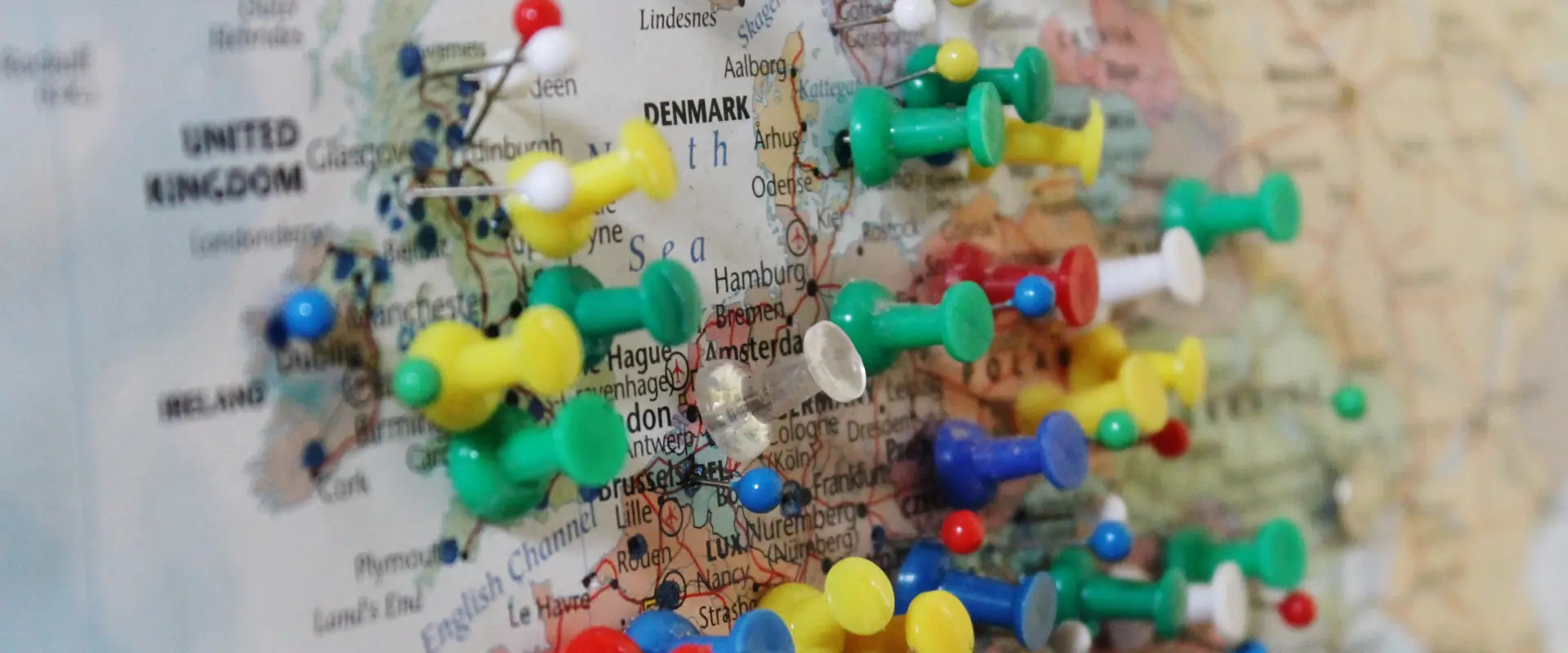
Europe by Charles Clegg, CC BY-SA 2.0, modified
  1. Study.eu
  2. Ireland
  3. Trinity College Dublin (TCD)
  4. Conflict Resolution and Reconciliation

Conflict Resolution and Reconciliation

Master of Philosophy at Trinity College Dublin (TCD)

Programme details
Degree: Master of Philosophy (MPhil)
Duration: 12 months
Study modes: full-time, part-time

Request information about study programmes in Ireland  

Other students were also interested in this programme:
Master of Science
Business Economics
University of Antwerp (Belgium)

Learn more now


Description:

Course Description

After registration in Dublin at the start of the course, teaching takes place in Belfast over two teaching terms, September to December and January to early April.

The M.Phil. in Conflict Resolution and Reconciliation is designed to suit the needs of specialists already working in conflict resolution and reconciliation, as well as those new to these fields of study.

This course is based in Belfast, Northern Ireland reflecting the School and Trinity’s commitment to cross-border education. It offers an inter-disciplinary approach to the challenges of political and social reconciliation in the aftermath of armed conflict. It equips graduates for work with local and international organisations, and provides transferable skills for a wide variety of careers, including mediation, diplomacy, policy, advocacy, journalism, teaching, and ministry, as well as Ph.D. research.

Modules offered include weekly classes taught at the Irish School of Ecumenics, Belfast, as well as the option to take a one week-long residential course at the Corrymeela Community Centre for Reconciliation in Ballycastle on the north Antrim coast. This course offers students academic and theoretical insight into conflict resolution and reconciliation, as well as practical skills and experience through placements and workshops. Students are offered the chance to engage with community-based actors and organisations involved at grassroots level in the process of conflict transformation and social justice. As such, the course is a hybrid of the theoretical and practical and offers a dynamic learning experience beyond the classroom setting.

Northern Ireland faces many social and political challenges as it emerges from decades of violence. Yet Belfast is a vibrant city, undergoing an exciting post-conflict transformation. The city provides a unique backdrop for the M.Phil., allowing students to immerse themselves in a society grappling with the challenges of, and opportunities for, conflict transformation.Course Content (please note that not all modules may be offered every year):Core module:

  • Research Skills

Optional Modules:

  • Reconciliation in Northern Ireland
  • Conflict Transformation
  • Foundations of Conflict Resolution Research
  • Transitional Justice
  • Dynamics of Reconciliation
  • Contemporary Conflict and Peacemaking: Global Perspectives
  • Mediation and Conflict Analysis Skills
  • Community Learning and Reflective Practice
  • Dissertation

Modules may change from year to year.

Modules from the M.Phil. in International Peace Studies, the M.Phil. in Intercultural Theology and Interreligious Studies, and the M.Phil. in Christian Theology (taught in Dublin) are also open to students on the M.Phil. in Conflict Resolution and Reconciliation. Students seeking to be assessed for their work on a module in one of the other courses must first secure the permission of the relevant course coordinators. Students may take up to two modules from the other courses.

Dissertation: A research dissertation (15,000 – 20,000 words) to be supervised by an appropriate member of staff and to be submitted in August. Students who complete the taught element of the programme but not the dissertation may be eligible from the postgraduate diploma. 


Learn more about Masters in Ireland

You are interested in study programmes like this one? Fill in your details to receive information about studying in Ireland or elsewhere in Europe:

Are you a national of this country? If yes, simply submit the form again to confirm.

Please double-check the form inputs and then submit again.

Working... Submitting request...

Your request has been submitted!


Copyright © 2021 Study.EU


Imprint · About Study.eu · Privacy Policy · Jobs
Press

Advertise on Study.eu
Study in Europe:
Austria
Belgium
Czech Republic
Denmark
Estonia
Faroe Islands
Finland
France
Germany
Greece
Hungary
Iceland
Ireland
Italy
Latvia
Liechtenstein
Lithuania
Malta
Netherlands
Norway
Poland
Portugal
Romania
Russia
Spain
Sweden
Switzerland
United Kingdom
Recent articles:

Impact of COVID-19 on studying abroad in Europe: Overview

US students: How to use FAFSA for a degree in Europe

Guide: the UK Post-Study Work Visa for graduates

Looking for a UK degree in Germany? Study in Leipzig!

Study Biomedicine or Biomedical Sciences: All you need to know

Study.EU has been mentioned in numerous news publications worldwide, such as:
L'Étudiant (France)
Frankfurter Allgemeine (Germany)
The Standard (Hong Kong)
The Independent (UK)
Al-Masry Al-Youm (Egypt)
Le Monde (France)
The Local (Europe)
Forbes (USA)
Cookies & analytics help us deliver our services. Privacy policy