Study at Justus Liebig University of Giessen
Gießen, Germany
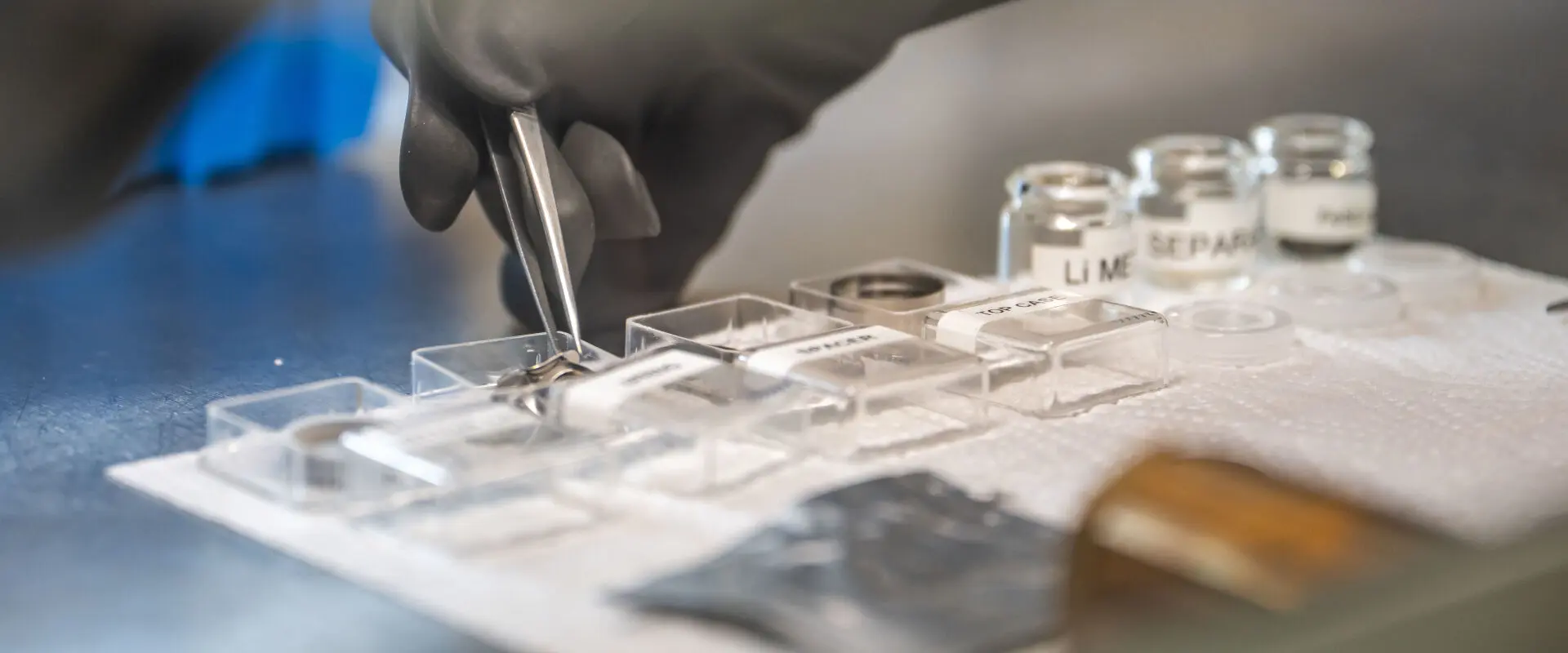
Photo by Roland Duss
| Programme details | |
|---|---|
| Degree: | Master of Science (MSc) |
| Disciplines: |
Physics
Materials Science |
| Duration: | 2 years |
| ECTS points: | 120 |
| Study modes: | full-time |
| Delivery modes: | on-campus |
| University website: | Advanced Materials |
Request information from Justus Liebig University of Giessen
Which materials improve the performance of batteries in electric cars? How should a solar cell be coated so that it generates more electricity? How can the material properties of implants be improved so that they are not rejected by the human body?
Advanced materials are modern functional materials whose properties have been specifically modified in order to optimise them for a particular application. Areas of application include medicine, mobility, communication, energy supply and aerospace. The development of such advanced materials requires interdisciplinary knowledge of chemistry and physics in order to understand and modify the interplay of material properties, as well as creativity and a spirit of discovery for practical optimisation in the laboratory.
The research-oriented Master's degree in Advanced Materials provides you with the theoretical and practical knowledge to optimise materials for future applications and develop them further in a professional environment. The programme is closely integrated into current materials research in Giessen with a focus on high-performance materials and energy materials. This gives you the opportunity to work on current research projects.
You will acquire in-depth practical skills in the laboratory, work independently on smaller research projects and learn to develop solutions to problems with innovative ideas. In addition to basic expertise in materials science, you will specialise in a materials science research topic from the outset and thus hone your individual profile.
The Master's degree programme in Advanced Materials is a research-oriented degree programme. In the first and second semesters, it comprises four basic materials science modules on functional solid-state materials, functional ‘soft’ materials, the technical fundamentals of materials science and renewable energies.
From the first semester onwards, students choose a subject specialisation, such as
In addition, students can pursue their individual interests in compulsory elective modules. As part of the research module in the third semester, students work on a theoretical and practical materials science problem in a research group in the fields of chemistry and physics. Building on this, the Master's programme concludes with the Master's thesis in the form of an independent scientific paper in the fourth semester.
The Master's degree programme qualifies you for management and leadership positions in a broad spectrum of social, economic and industrial areas through specialisation and a high proportion of project work in one of the materials science-oriented working groups.
These include, for example:



Visit the website of Justus Liebig University of Giessen to find out how to apply and start your study-abroad adventure in Germany! 🙌