Applying for a Master’s degree in Belgium (2026)
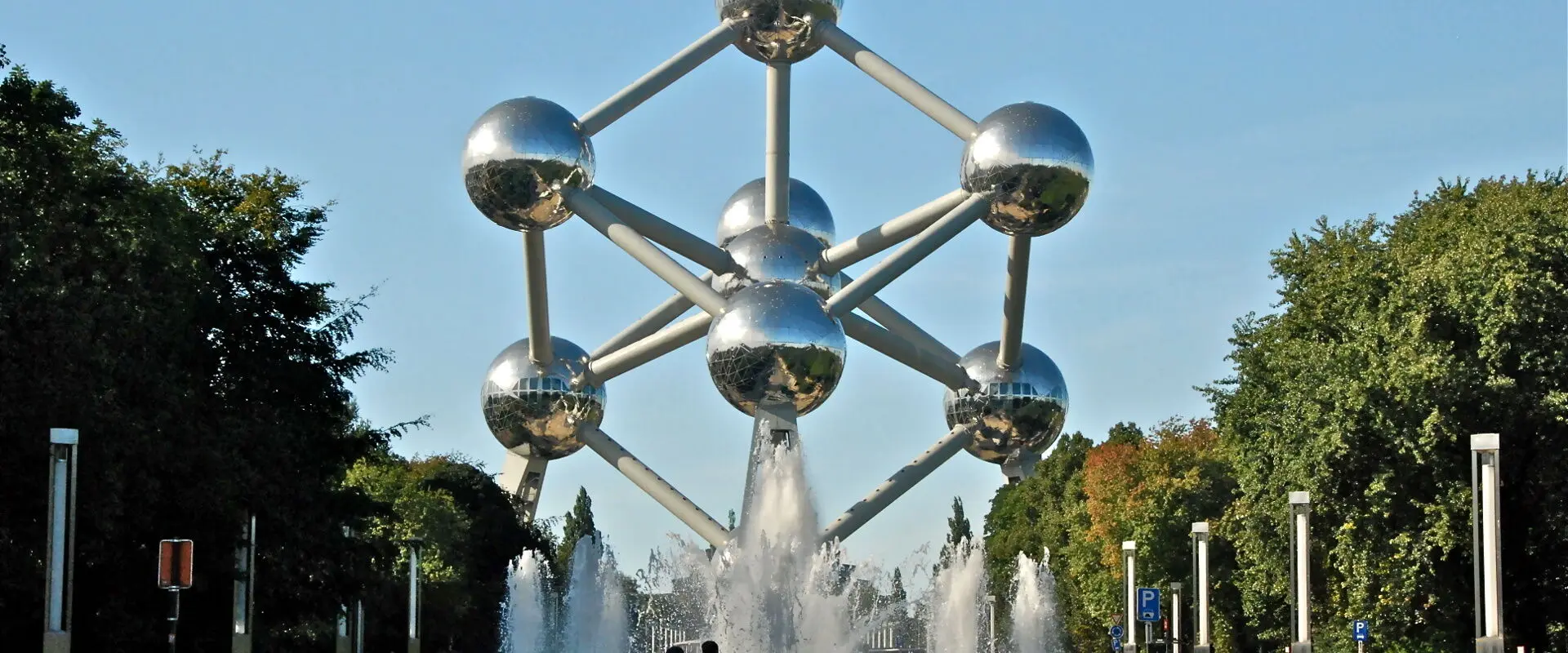
L'Atomium et la fontaine by Stephane Mignon, CC BY 2.0, modified
 |
|
|---|---|
| 18 | universities offer Masters in Belgium in English |
| 310 | Masters are available |
If you’re looking for a Master’s degree in a country that’s small but incredibly well connected, Belgium is hard to beat. Right at the centre of Europe, it offers easy access to multiple countries, a mix of cultures, and a strong international vibe; especially in cities like Brussels, where European institutions shape daily life.
Belgium also has a unique structure: the country is split into Dutch-speaking Flanders and French-speaking Wallonia, which also influences how universities operate. This gives students a chance to experience different traditions and languages within one country.
Combined with high-quality universities and a wide range of English-taught Master’s programmes, Belgium offers a study experience that’s both diverse and well connected.
The official Study.eu database lists more than 250 Masters in Belgium that are fully taught in English. Find yours today!
Searching for Masters on Study.eu is the best first step to any study-abroad plan.
Tuition fees in Belgium differ noticeably between the regions of Flanders/Brussels and Wallonia.
There are some exceptions, and in certain cases, students from non-EU countries may pay the same tuition fees in Belgium as EU students. Check directly with your university for the exact details.
These regional frameworks mean that both the legal cap and the actual amounts charged can vary depending on whether you study in the country.
To apply for a Master’s in Belgium, you generally apply directly to each university rather than through a single national portal, so there is no one central application system for all Belgian universities.
Each institution runs its own online application, with its own deadlines, required documents, and admission conditions.
Some universities in Belgium follow no numerus clausus procedures and have non-restricted programmes, so there is no limit on the number of students who can be admitted. This means that all applicants who meet the academic requirements and submit the necessary documents can enrol.
For a Master’s application to a Belgian university, you are usually asked to prepare the following documents, adapted slightly per institution but broadly consistent across Flanders, Brussels, and Wallonia.
Common application documents:
Official Bachelor’s diploma (or a provisional certificate if you are still in your final year).
Transcript of records showing all courses, grades, and ECTS.
Valid passport or ID scan.
Proof of language proficiency (e.g., IELTS, TOEFL).
Motivation letter.
CV.
Letters of recommendation, depending on the programme.
For certain programmes (e.g., arts, design, some business schools), a portfolio or additional assignments may be required.
Many Belgian universities require your foreign educational documents (diploma and transcripts) to be apostilled or consular‑legalised, especially if the issuing country is outside the EU.
Some universities may then ask for a certified translation into English, French, or Dutch if the documents are not already in one of these languages.
Most Belgian universities offer a single main intake starting in September, and they have different deadlines for EU/EEA/Swiss applicants and non‑EU applicants who need a study visa.
Broadly speaking, you can expect:
Check the specific faculty or programme page, as some subjects (medicine, arts, or business) have earlier deadlines than the general university schedule.
Masters in Belgium are relatively cheap, but there are still several scholarship options that can ease cost pressure, especially for international students.
Most of these are either regional government schemes or university‑specific grants, with some programmes tied to EU‑level opportunities like Erasmus+.
In some cases, you apply to the university and scholarship at the same time; in others, it's necessary to first apply to the university and then submit your admissions documents as part of the scholarship application.
Finding accommodation in Belgium is an important part of preparing for your studies, and most students start looking several months before arrival.
Because demand is especially high ahead of the September intake, it’s common to secure a place early through university channels, WhatsApp groups, regional sites like MyKot (Brussels), Student.be, Kotweb/Kotatgent (Antwerp/Ghent), etc.
Students usually choose between university-managed housing (“kots”, halls, residences) and the private rental market, with both options widely used depending on budget and lifestyle. University residences are often the easiest first step, while shared flats are the most common long-term choice.
If you are a non‑EU/EEA or non‑Swiss citizen, you usually need a Type D long‑stay study visa (national visa) plus a residence permit to follow a Master’s degree in Belgium, whereas EU/EEA/Swiss students simply have to register locally in their city upon arrival.
This visa process is managed by the Belgian embassy or consulate in your home country, not by the university itself. You will need to attend an in‑person appointment, where you submit all documents, have your fingerprints and a digital photo taken, and pay the visa fee of €180.
Here are the documents required:
To study in Belgium, you need to prove you have enough funds. These are set at €1,062 per month for 2026-2027 (ca. €12,744 per year), although some universities may require a slightly higher amount. The most common way to show this is by depositing the full amount into a blocked bank account in your name, either through your university or a specialised financial provider. (Note that a handling fee of roughly €100 to €150 also applies.) Once you start your studies, you would then get your money paid back to you in monthly instalments. Alternatively, you can also prove your finances through scholarships or with an official sponsorship from someone who agrees to support you.
Once in Belgium, and within 8 days of your arrival, you must register at your local city hall and apply for a Belgian residence permit (A‑card), which is then renewed annually for the duration of your Master’s.
Getting to Belgium is relatively easy thanks to its central location. The most straightforward option is to fly into Brussels, which is well connected to destinations across Europe and beyond. From there, you can quickly reach major student cities like Antwerp, Ghent, or Leuven by train.
If flights to Brussels are expensive or limited, it’s also worth checking nearby hubs like Amsterdam or Cologne. Both cities have large international airports and are just a few hours away from Belgium. From there, you can easily continue your journey by train or bus.
Once in the country, Belgium’s train network makes it simple to get around. Most student cities are well connected, so reaching your final destination is usually quick.
Master’s in Belgium typically take 1 year (60 ECTS) or 2 years (120 ECTS) to complete, depending on the field of study and programme structure.
Fees in Belgium range from about €800 to €1,200 per year for EU students, and up to 9,000 for non-EU students.
Ready to study in Belgium?