Study at Justus Liebig University of Giessen
Gießen, Germany
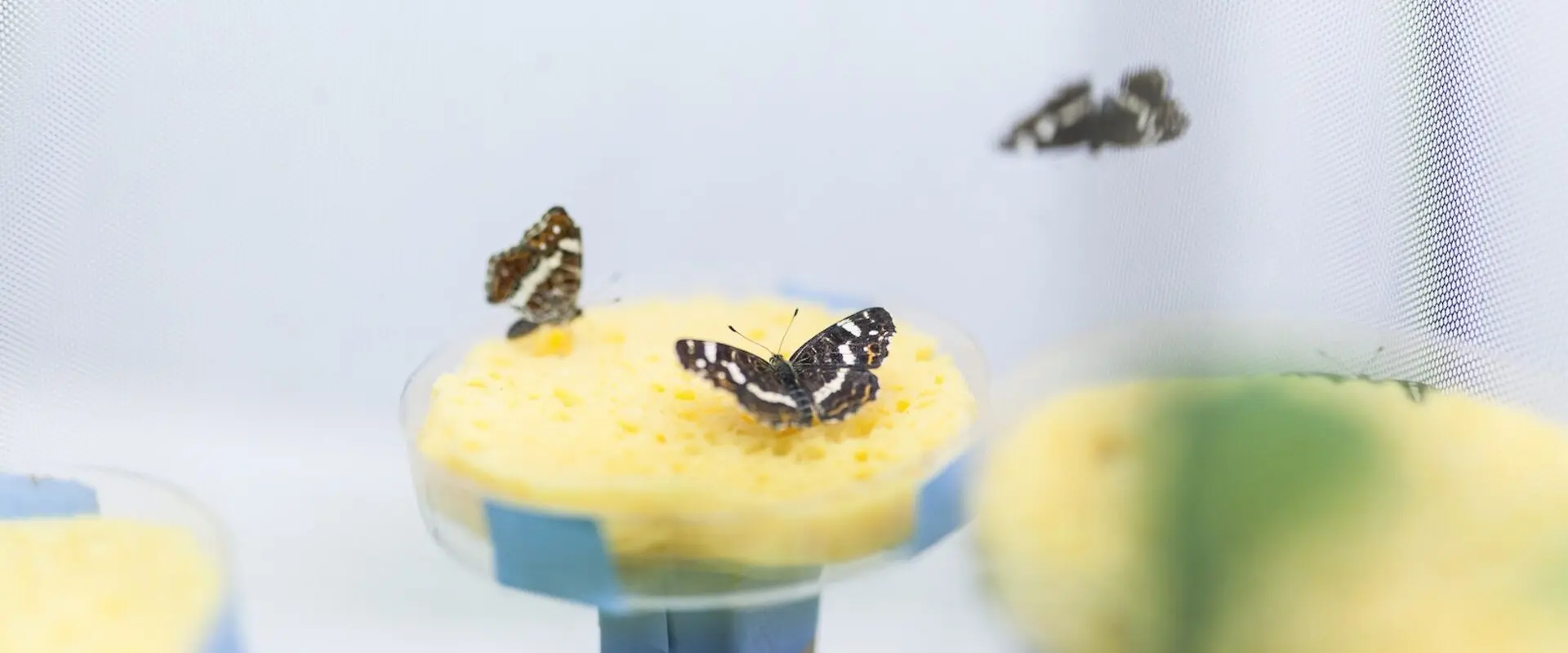
Photo by Jochen Gerhardt
| Programme details | |
|---|---|
| Degree: | Master of Science (MSc) |
| Disciplines: |
Bioengineering & Biotechnology
Biology Ecology |
| Duration: | 2 years |
| ECTS points: | 120 |
| Study modes: | full-time |
| Delivery modes: | on-campus |
| University website: | Insect Biotechnology and Bioresources |
Request information from Justus Liebig University of Giessen
With more than one million scientifically described species, insects are the largest group of organisms on Earth. As an emerging interdisciplinary research area, insect biotechnology explores insects as well as insect-associated micro- and macro-organisms as emerging bioresources in the fields of medicine, crop protection, pharmaceuticals, industrial food and biotechnology.
During your studies you will deal intensively with the systematics and ecology of insects and acquire specific scientific and technical knowledge. You will also learn about various methodical research approaches to investigate insects and their associated organisms as a new resource for food and luxury food, enzymes and bioactive natural products and finally to refine fully developed products.
The study programme is characterized by a strong emphasis on research and practical relevance, as well as a high level of interdisciplinary approaches and projects.
The Master of Arts in Insect Biotechnology and Bioresources is organized in modules (courses). Each module comprises four semester hours per week and is completed with a final examination as given in the module description. The final grade of the study programme is calculated from the achieved module grades.
The course consists of 8 mandatory modules (core modules), 6 optional modules (profile modules), an industrial internship (or 2 more profile modules) and the Master‘s thesis. Having completed the core modules, the students are well equipped with a solid scientific education and ready to deepen their knowledge in specific research areas. By individually choosing their profile modules from a diverse range of study areas, students shape their individual competence profile.
The Master's degree programme offers a voluntary internship that enables our students to gain an initial insight into the various areas of professional activity in which they hope to pursue in the future. The internship also enables them to collect hands-on professional experience and establish contacts with potential employers. The internship can be conducted in various areas such as the chemical industry, agricultural corporations, the food industry, government agencies or NGOs. The variety of contacts that our faculty possesses allow us to provide expert support to students seeking an internship.
Graduates of Insect Biotechnology and Bioresources are trained to work at all levels of agricultural production and pest control, medical biotechnology, bioinformatics, food production, business management and marketing.
There are many job opportunities in the agricultural industry (seeds, fertilizer, pesticides), biomedicine, pharmaceuticals, food biotechnology and health care. Producers and professional organizations, research institutes, consultancies, development services and international organizations are also potential employers.
Graduates with a Master's degree take up management positions in national and international authorities and associations. Other areas of employment include quality management, further education, consulting and research, public relations and marketing.
After completing your Master's degree, you will have the opportunity to pursue a doctorate at JLU. Doctoral studies take place in a professorship at Faculty 09, to which you must apply. If you are interested in pursuing a doctorate at JLU, please contact the institute or professor in your area of interest directly.
Open positions for various professorships can be found on the JLU job market.



Visit the website of Justus Liebig University of Giessen to find out how to apply and start your study-abroad adventure in Germany! 🙌