Applying for a Bachelor’s degree in France (2026)
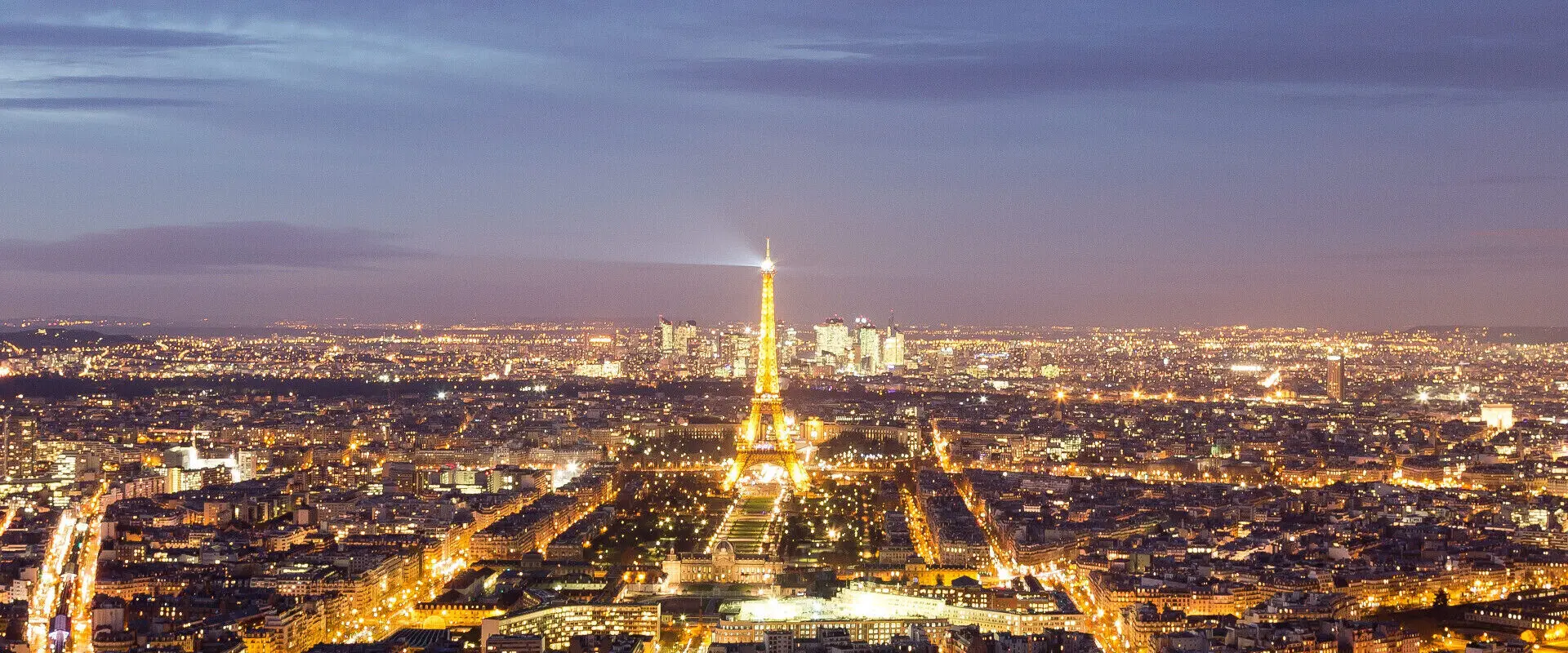
Photo by Pexels / Pixabay, Public domain
 |
|
|---|---|
| 20 | universities offer Bachelors in France in English |
| 68 | Bachelors are available |
Planning to study your Bachelor’s in France? This step-by-step guide walks you through everything you need to know, from choosing the right Licence programme or business school, to understanding admissions, tuition fees, and student life.
Get ready to navigate the application process and start your journey abroad.
The official Study.eu database lists around 100 Bachelors in France that are completely taught in English. Find yours today!
Searching for Bachelors on Study.eu is a great first step to any study-abroad plan.
In France, higher education is structured around the LMD system: Licence (3‑year Bachelor), Master (1 to 2‑years), and Doctorat (3‑year PhD). This framework aligns French degrees with the Bologna Process, making them comparable to the rest of Europe.
The system is organised into different types of institutions, including public universities, which offer a very limited number of English-taught degrees, and Grandes Écoles and business schools, where you’ll find a much wider range of English-taught Bachelor’s programmes.
The system uses the “Bac+” structure to describe academic levels: Bac+2 corresponds to a short-cycle diploma (after two years of study), Bac+3 corresponds to a Bachelor’s degree (Licence), and Bac+5 refers to a integrated programmes that take you directly to a Master‑level qualification.
Bachelor’s programmes in France are usually broad in the first year, then let students specialise gradually in later years. Assessment is usually based on a combination of exams, coursework, and continuous evaluation rather than a single final exam.
Important: If you have already started your Bachelor’s in your home country, some French universities allow you to complete your final year with them. This is a relatively common practice in France compared to much of Europe, partly because there are fewer English-taught Bachelor’s programmes. It helps universities integrate international students directly into the third year (L3), allowing them to “top up” their degree in France without having to restart their studies from the beginning.
Tuition fees in France are heavily subsidised by the state, especially at public universities, but the exact amount depends on your nationality, the type of institution, and sometimes your country of origin.
At public universities, the French government sets these fees by law, so the amounts are similar across institutions. For the 2025-2026 academic years, the typical structure looks like this:
Some non-EU students from eligible countries can pay the same low fees as EU students at public universities thanks to national exemptions from the “differentiated tuition fees”, which depend on factors such as country of origin, residency status, scholarship eligibility, refugee status, long-term residence, or international agreements.
Private universities and selective business or engineering schools (Grandes Écoles) set their own fees, so they are much higher. For Bachelor’s degrees, typical ranges is around €6,000 to 18,000 per year, depending on the institution and programme.
To apply for a Bachelor’s degree in France, which route you use depends mainly on where you graduated, where you live, and your nationality.
The three main systems are Parcoursup, DAP (Demande d’Admission Préalable), and Études en France.
There are many rules to take into account, so if you’re unsure which pathway applies to your situation, don’t hesitate to contact the admissions team at your preferred university. They’ll be happy to help!
Students applying for a Bachelor’s in France usually need similar core documents regardless of route, but the exact list can change slightly by platform and by nationality.
Typical documents include:
Each application platform in France also has its own process and document requirements, so it’s important to understand how they differ before you apply.
Timing is one of the most important parts of applying for a Bachelor’s in France, because each route has its own fixed calendar.
Know which deadline applies to you:
Most students choose to complete their file and confirm their applications weeks or even months before the official deadline to avoid technical issues or missing important steps.
Studying in France is generally affordable for international students, especially outside Paris, and there are numerous scholarship opportunities offered by both public and private institutions across all study levels and fields.
Platforms like Campus France list a wide range of funding options, including prestigious awards such as the “Eiffel Excellence Scholarship” and the “Make Our Planet Great Again” programme from the French Ministry for Europe and Foreign Affairs, as well as grants provided directly by universities.
Study.eu Tip: many French regions and cities also offer their own scholarships for international students enrolled locally, so it’s worth checking with your university’s admissions office to make sure you don’t miss any available funding opportunities.
If you are a citizen of the EU, EEA, or Switzerland, you do not need a visa to study in France and can skip this step entirely.
All other international students must apply for a long-stay student visa (VLS-TS étudiant), which allows you to live in France for up to one year while studying and can later be renewed as a multi-year residence permit (carte de séjour pluriannuelle).
For students from one of the countries covered by the “Études en France” procedure, the visa process is integrated into the application platform and handled automatically with the French consular authorities in your home country. Once in France, you must validate your visa online within three months of arrival, a fully digital process.
The French government provides an online questionnaire to guide you through the correct steps.
As a student in France, a good starting point is to explore university-affiliated housing such as student residences, which are often a great way to settle in and meet fellow students to share experiences and advice.
If your university doesn’t provide accommodation support, you can look into private rentals via platforms like SeLoger, CROUS, or Le Bon Coin, while being careful to avoid scams and always ensuring proper legal contracts, especially in larger cities like Paris.
Joining local student communities and online forums can also be very helpful, as they allow you to connect with potential roommates and start building friendships and a newtwork from day one.
Paris is one of the most visited cities in the world, with hundreds of direct flights connecting it to destinations across all continents.
Thanks to its central location in Europe, it is also easily accessible by train or bus from many neighbouring countries such as Switzerland, Spain, or Germany. Once in France, an extensive high-speed rail network makes it simple to travel between major student cities such as Lyon, Toulouse, and Nantes.
Bon voyage!
Bachelor’s degrees in France typically take 3 years to complete (180 ECTS credits). Public universities often offer the 3rd year as a top-up to international students.
Bachelor’s tuition fees are typically very low at public universities (around €175 to €3,000 per year), but can rise to €8,000-€20,000+ annually at private institutions and business schools.
Ready to study in France?