Applying for a Bachelor’s degree in Belgium (2026)
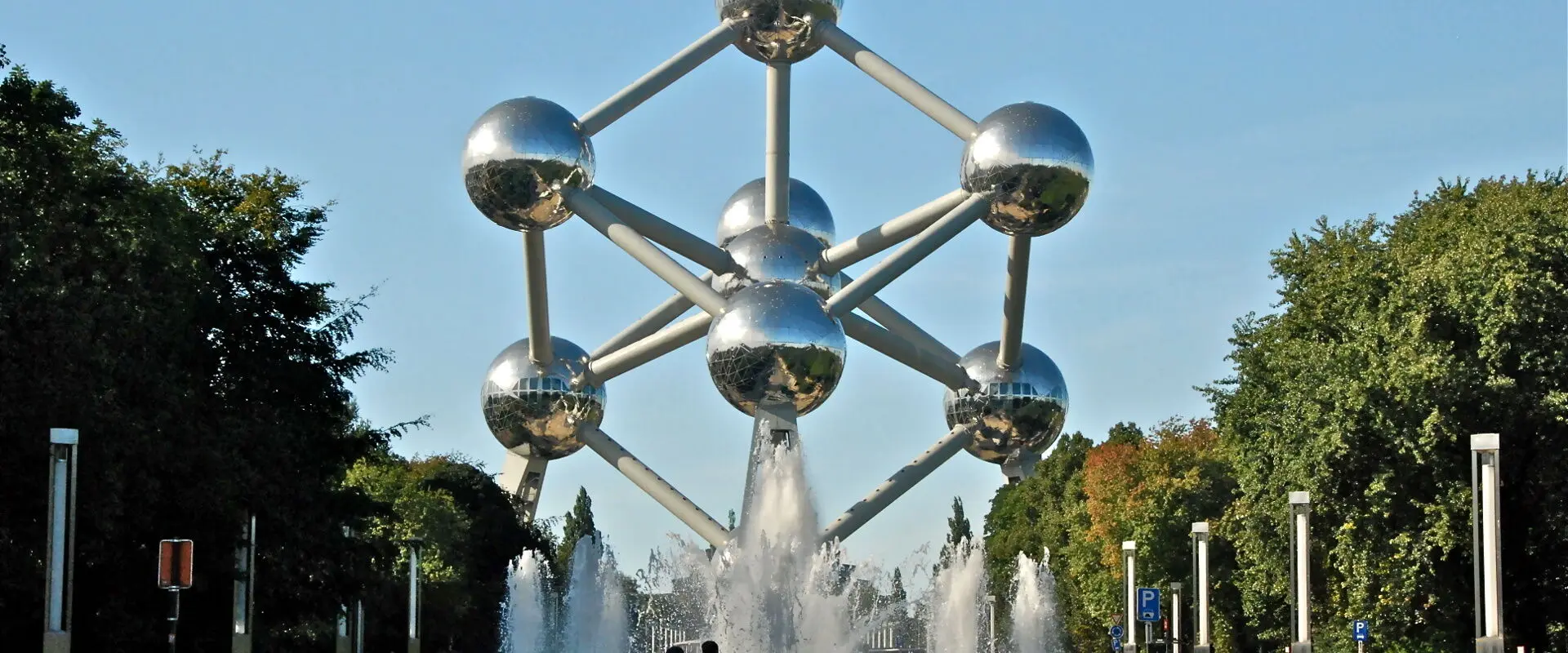
L'Atomium et la fontaine by Stephane Mignon, CC BY 2.0, modified
 |
|
|---|---|
| 13 | universities offer Bachelors in Belgium in English |
| 83 | Bachelors are available |
Belgium is a hidden gem among international study destinations, known for its strong universities and world-class education. Divided into Dutch-speaking Flanders and French-speaking Wallonia, the country offers a unique academic landscape, with programmes influenced by different linguistic and cultural traditions.
Studying a Bachelor’s in Belgium means putting yourself right in the middle of Europe’s political and economic hub. With Brussels hosting key European institutions and companies, and excellent connections across the continent, it’s an ideal place for students thinking about international careers.
The official Study.eu database lists around 50 Bachelors in Belgium that are fully taught in English. Find yours today!
Searching for study options on Study.eu is the right first step to enrolling in a Bachelor in Belgium.
Belgium Bachelor tuition fees are generally low for EU/EEA students and higher for non‑EU students, but these also differ between regions.
There are some exceptions to keep in mind and, under certain circumstances, students from non-EU countries may qualify for EU-level tuition fees in Belgium.
On the other hand, private universities and business schools (especially in Brussels) can charge significantly more, often between €10,000 and €20,000 per year.
Applying for a Bachelor in Belgium is usually done directly through each university, as there’s no single national application platform.
The process itself is quite straightforward: you fill in your details, upload required documents, and pay the application fee (typically in the range of €50-€200 per university, though some institutions do not charge one at all).
Some universities in Belgium do not apply numerus clausus restrictions and instead offer non-restricted programmes, meaning there is no fixed limit on the number of students who can be admitted. As a result, all applicants who meet the academic requirements and submit the necessary documents are generally able to enrol.
A great (and often overlooked) resource is university webinars. Many Belgian universities host free online sessions where they walk you through the application process step by step, explain requirements, and answer questions live. These are especially helpful if you’re applying from abroad and want a clearer idea of what to expect; so it’s definitely worth signing up for them early on.
The documents typically needed for English‑taught Bachelor’s programmes in Belgium are the following:
If you haven’t graduated from high school yet, you can usually apply with proof that you’re in your final year. This would be typically an official letter from your school confirming your expected completion.
Official documents must be translated and, if required, submitted as legalised or certified copies; especially if they are not in English, Dutch, or French.
The main intake for English-taught Bachelor’s programmes in Belgium is in September. Students from the EU/EEA can apply relatively late in the year, while non-Europeans need to apply earlier:
Some competitive or specialised programmes (such as Medicine) often follow different admissions timelines. In many cases, they also schedule entrance exams on specific dates, which are not the same as other programmes, so applicants need to check these requirements carefully in advance.
Since timelines can vary slightly between universities and programmes, always refer to the official programme page to be sure.
There is a limited range of scholarship opportunities for Bachelor’s students to study in Belgium, especially for international applicants. Most awards are partial (tuition reductions or small grants) rather than fully funded, and they are often highly competitive.
Government support is mainly aimed at Belgian or EU residents, while non‑EU students typically rely on regional calls, university‑specific grants, and external scholarships.
At the regional level, the Wallonia-Brussels Federation (ARES) runs a fully funded scholarship programme for students from selected developing countries to follow a Bachelor’s in Belgium. These scholarships usually cover tuition fees, living expenses, insurance, and travel costs. In contrast, the Flemish Government mainly provides fee reductions and living‑cost allowances for Belgian/EU students with financial need.
Several universities in Flanders and Brussels offer partial tuition‑fee scholarships or small bursaries for international students, based on merit or financial need.
Sorting out accommodation in Belgium is one of the key steps when preparing for your studies, and most students begin their search a few months before moving.
Places fill up quickly, so many students secure housing early using university portals, student networks, WhatsApp groups, and local platforms such as MyKot in Brussels, Student.be, or Kotweb/Kotatgent in cities like Antwerp and Ghent.
In terms of options, students usually decide between university-managed housing (such as “kots”, dorms, or residences) and private rentals. University housing is often the simplest way to get settled when you first arrive, while shared flats are the most popular long-term choice.
Students from the EU/EEA and Switzerland do not need a visa to study in Belgium, but they must register with the local municipality after arrival.
Meanwhile, if you are a non-EU/EEA student, you will generally need a Type D long-stay visa, followed by a residence permit once you arrive. The visa application is handled through the Belgian embassy or consulate in your home country, not by the university. You’ll usually need to attend an in-person appointment where you submit your documents, provide biometric data (fingerprints and photo), and pay a fee of around €180.
Typical documents include:
To show financial means, students must generally prove around €1,062 per month for 2026-2027 (about €12,744 per year), although some universities may request a higher amount. This is commonly demonstrated through a blocked bank account, managed by your university or by a financial provider. You pay in the full annual amount; and then you receive it back in monthly payouts after the start of your studies. (Note: Expact a one-time handling fee of ca. €100 to €150 for the whole year.) As an alternative, you can demonstrate sufficient financial resources through a scholarship or by providing official sponsorship from someone who agrees to support you.
After arriving in Belgium, you must register at your local city hall within 8 days and apply for a residence permit (A-card). This permit is usually renewed annually for the duration of your studies.
Thanks to its central location, travelling to Belgium is usually quick and straightforward. Most students choose to fly into Brussels, which has excellent international connections and easy train links to cities like Antwerp, Ghent, or Leuven.
Another option is to fly into nearby cities such as Amsterdam or Cologne. These airports often offer more flight choices and competitive prices, and from there you can reach Belgium in just a few hours by train or bus.
Once you arrive, getting around is simple. Belgium’s public transport system is reliable and well connected, making it easy to reach your university city without much hassle.
Bachelors in Belgium typically last three years (with 180 ECTS credits).
Fees for Bachelor’s in Belgium are generally low for EU/EEA students (around €800 to €1,200 per year) and higher for non‑EU students, ranging from €3,000 to €7,000 per year. Private institutions charge significantly more.
Ready to study in Belgium?