Norway: Tuition fees & cost of living
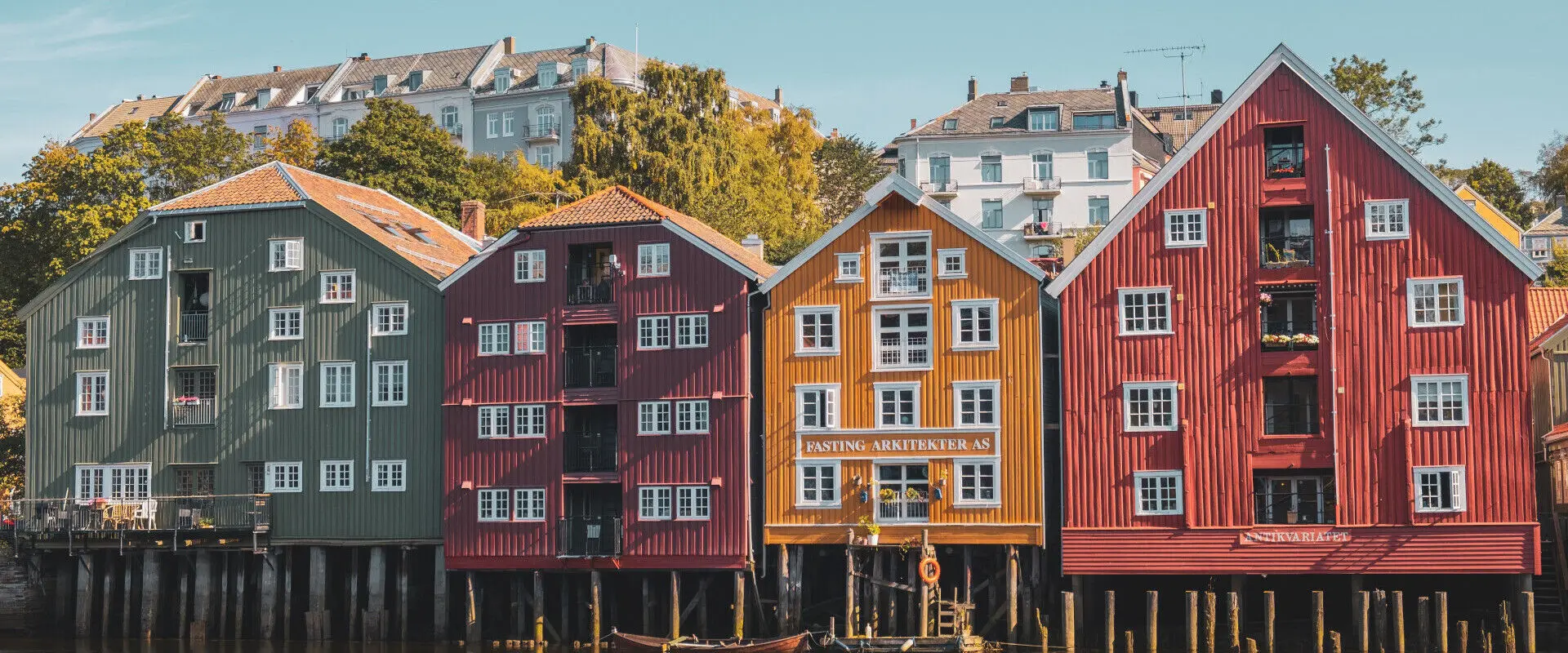
Photo by op23 / Pexels
If seeing the Northern Lights is on your bucket list, chances are you are already familiar with how awe-inspiring Norway’s natural landscape is. But beyond being a tourist destination, Norway is also very popular with international students.
For a long time, studying in Norway used to be tuition-free for all students. But beware: Since autumn 2023, only citizens of the EU/EEA or Switzerland can study for free, while all other students have to pay tuition fees.
Study in Norway: Find Bachelors & Masters now
Students who are citizens of the EU/EEA or Switzerland, or who are already permanent residents of Norway, can study tuition-free at Norwegian universities.
Also, exchange students from universities in other countries don’t pay tuition fees in Norway (but might still have to pay fees at their sending institution)
However, all other students have to pay tuition fees. Norway used to be tuition-free for all students, but has since then changed the law. Since autumn 2023, non-European students are charged for their studies if they are studying in Norway for their full degree.
Public universities distinguish between nationalities to decide whether a student has to pay for their Bachelor in Norway or Master in Norway:
Students who are citizens of a country in the EU or EEA, or Switzerland, can study for free at public universities. They might have to pay fees at private institutions.
International students from outside the EU/EEA generally have to pay tuition fees (“studieavgift” in Norwegian”) to get their degree in Norway. This is a new rule since autumn 2023.
All students also have to pay a so-called semester fee of about 100 euros.
Students enrolling at private universities and business schools in Norway generally have to pay tuition fees.
The exact amounts are different depending on whether you’re a citizen from the EU/EEA or Switzerland, or of another country.
For example, studying for a Bachelor at BI Norwegian Business School costs EU/EEA students 106,400 NOK per year (ca. €9,100), while other international students have to pay ca. 138,400 NOK (ca. €12,000).
Here is an overview of tuition fees at public universities in Norway. These fees only apply to degree-seeking students who are not citizens of the EU/EEA or Switzerland:
| University | Tuition fees per year (for students who are not from the EU/EEA/CH) ...in NOK |
Tuition fees per year (for students who are not from the EU/EEA/CH) ...in EUR |
|---|---|---|
| NHH Norwegian School of Economics |
142,000 NOK for Bachelors; 204,000 NOK for Masters |
Ca. €13,000 for Bachelors; ca. €18,000 for Masters |
| Nord University | 141,000 to 320,000 NOK | Ca. €12,000 to €28,000 |
| NTNU Norwegian University of Science and Technology | between 176,300 NOK and 528,650 NOK depending on programme category; but mostly around 205,600 NOK | between €16,000 and €47,000 depending on programme category; but mostly around €18,500 |
| Oslo Metropolitan University | 67,000 to 95,000 NOK | Ca. €5,800 to €8,200 |
| University of Agder | 47,000 to 135,000 NOK | Ca. €4,000 to €12,000 |
| University of Bergen | 197,000 to 401,700 NOK | Ca. €18,000 to €36,000 |
| University of Oslo | 204,000 to 295,000 NOK | Ca. €16,000 to €23,000 |
| University of Stavanger | 60,000 to 85,000 NOK | Ca. €5,200 to €7,400 |
| Western Norway University of Applied Sciences | between 130,000 NOK and 500,000 NOK depending on programme category; but mostly around 260,000 NOK | between €12,000 and €45,000 depending on programme category; but mostly around €23,500 |
The ranges are quite broad, and the exact fee levels relate to the subject. Bachelors and Masters in Business or Languages are cheapest; Bachelors and Masters in Engineering and IT are more expensive; and the most expensive programmes are those in Medicine or in creative subjects like Design or Music.
Since 2025, universities have been allowed to set their own tuition fees rather than charging the full cost of each programme. As a result, some institutions have already reduced their fees significantly, and others are expected to follow for future intakes.
(All of the above are tuition-free for European students who are citizens of the EU, EEA, or Switzerland.)
Norway is not an affordable country for international students. Due to the high living costs, it can be quite expensive to get your education even if you do not have to pay the fees that apply to non-European students.
Scholarships might be an option to finance your studies. However, neither the Norwegian government nor most individual universities offer any scholarship schemes for international students. In most cases, you have to find other grants or other ways of financing your studies, such as through loans.
Study in Norway: Find Bachelors & Masters
Norway’s universities might be tuition-free for European students, but even then the cost of living is quite high – and a lot higher than pretty much anywhere else in Europe. If you’re mainly interested in Norway because you’d have to pay fees elsewhere, be aware that all in all, studying in Norway might still be more expensive than your other options.
The currency in Norway is the Norwegian krone (NOK). To be granted a student visa, you will have to demonstrate that you have enough funds to live on – at least 170,369 per academic year (about €15,365). However, your actual cost of living is likely to be higher. It’s worth checking with your institution, which should be able to give you an estimate of how much you will need. For example, the official website of Study in Norway estimates that international students need an average of ca. 15,488 NOK a month.
One of the biggest expenses in Norway is accommodation. If you rent a one-bedroom apartment on the private market in a city like Oslo, you can easily expect to pay more than 15,000 NOK (€1,250) per month. However, if you secure university-managed student housing and keep your other expenses under control, you can live on a more modest monthly budget. Local universities and student organisations estimate the following average monthly living costs (including rent, food, transport, and other essentials):
International students can work part-time during their Bachelor’s in Norway and their Master’s in Norway. Students from the EU/EEA and Switzerland don’t have any restrictions. All other international students have to follow a few rules: A study permit automatically gives you permission to work part-time, but only for up to 20 hours a week and full-time during holidays.
If you love Scandinavia but Norway is out of reach financially, you should also consider universities in:
All of them have similar fees for non-European students but at a lower cost of living.
If you are mainly looking for countries that have low or no tuition fees and affordable cost of living, consider looking at universities in:
Want to start your journey?
Find Bachelor’s & Master’s degrees in Norway 🇳🇴
399 Programmes in Norway


.svg "Radboud University")

.svg "Central European University (CEU)")


