Best Universities of Applied Sciences in the Netherlands
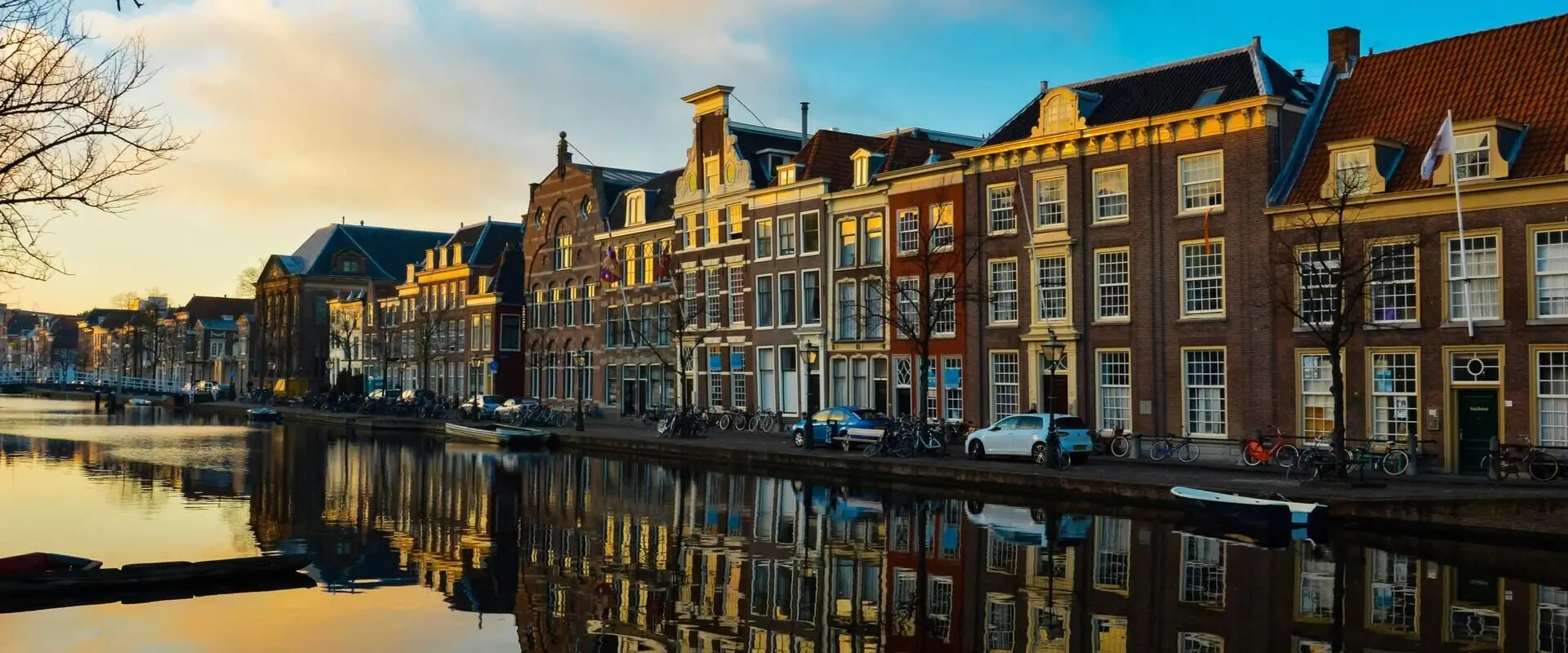
Photo by Lu Zhao
If you’re considering studying in the Netherlands, you might have come across Universities of Applied Sciences (in Dutch: hogescholen, HBO). These offer a hands-on, career-focused education that’s perfect for students who want practical skills, real work experience, and great job prospects.
This guide will help you understand what UAS are, how they differ from research universities, what are their requirements, and what you should consider when choosing one.
Find Bachelors & Masters in the Netherlands
In the Netherlands, there’s a clear distinction between Universities (WO – wetenschappelijk onderwijs - scientific education) and Universities of Applied Sciences (HBO – hoger beroepsonderwijs - higher vocational education), mainly in focus, teaching style, and career pathways.
In short, WO universities are best for academic and research careers, while HBO universities are better for hands-on skills and direct professional work.
Many other countries in Europe have a dual higher education system too, separating research-oriented universities from practice-oriented universities of applied sciences. Examples include Germany, Austria, and Switzerland (Universitäten vs. Fachhochschulen), Finland (yliopisto vs. AMK), Belgium (universities vs. Hogescholen/Hautes Écoles), and Denmark and Sweden (universities vs. university colleges).
According to the official site of Study in NL, there’s currently 43 universities of applied sciences in the Netherlands. Dutch UAS very rarely appear in global university rankings, as these prioritize research output, not professional or applied education.
Nonetheless, UAS-quality teaching is highly recognized, and their graduates have excellent prospects with employers in the Netherlands and abroad. Here are a few that stand out:
| University | Campus | Degree Type |
|---|---|---|
| Amsterdam University of Applied Sciences | Amsterdam | 17 Bachelors & Masters |
| Breda University of Applied Sciences | Breda | 12 Bachelors, 11 Masters, 2 Pre-masters, 2 Executive Programmes |
| Fontys University of Applied Sciences | Eindhoven | 23 Bachelors, 16 Masters, 14 Courses |
| Hanze University of Applied Sciences Groningen | Groningen | 18 Bachelors, 14 Masters |
| NHL Stenden, University of Applied Sciences | Leeuwarden | 19 Bachelors, 7 Masters, 2 Asssociate Degrees |
| Saxion University of Applied Sciences | Enschede | 17 Bachelors, 8 Masters, 1 Associate Degree |
| SRH Haarlem University of Applied Sciences | Haarlem | 3 Bachelors, 1 Masters |
| Webster University, University of Applied Sciences | Leiden | Undergraduate, Postgraduate Programmes |
| Windesheim University of Applied Sciences | Zwolle | 3 Bachelors |
| Wittenborg University of Applied Sciences | Apeldoorn, Amsterdam | 18 Bachelors, 37 Masters |
List of all universities in the Netherlands
Dutch universities of applied sciences have specific admission requirements, which can be similar to the ones at traditional universities. These admission conditions can vary by institution and programme, but normally include:
Applicants who do not meet the standard diploma requirements but are 21 or older may be able to apply via an alternative entrance route, such as a special institutional entrance exam, sometimes combined with interviews or motivation checks
Tuition fees in the Netherlands for universities of applied sciences depend mainly on your nationality and whether you qualify for the statutory (government-set) fee or the higher institutional fee.
For EU/EEA students, public universities charge a statutory fee of 2,695€ per year (2025–2026).
Non-EU/EEA students usually pay institutional tuition fees, which typically range from €9,000 to €20,00 per year at universities of applied sciences. Some specialised or competitive programmes may charge higher fees.
Some specialised schools or programmes (such as art academies, design schools, or private universities) often charge higher tuition fees. In some cases, these fees can exceed €11,000 per year, depending on the programme’s focus, facilities, and reputation. It’s important to take into account that highly competitive or professional programmes (e.g., film, music, or business management) may also come with additional costs, such as field trips, student activities or club fees related to the programme.
At Universities of Applied Sciences in the Netherlands, international students can study a wide range of profession-oriented programmes designed to prepare you for specific careers. These typically fall into several categories:
Study.eu Tip: Finding the right university can be challenging, but a few simple steps can make it easier. Start by looking at the curriculum to see if it aligns with the skills and knowledge you want for your future career. And remember that you can always reach out to the university directly and speak with their admissions team! It's a free resource and they will be happy to help you.
Living in the Netherlands can be expensive for students, with monthly costs for housing, food, transport, and other expenses often ranging between €900 and €1,200. Finding an apartment, especially in popular student cities like Amsterdam, Utrecht, or Rotterdam, can be very challenging due to high demand and limited supply.
To help first-year students, many Universities of Applied Sciences offer on-campus accommodation. For example, SRH Haarlem and Windesheim UAS provide housing options to ensure that new students have a place to live during at least their first year.
Dutch universities of applied sciences include internships into almost every Bachelor’s degree, and graduates usually transition quickly into the job market with high employment rates. These work placements are a compulsory part of HBO (UAS) programmes, often starting from year 2 or 3 and lasting about 18-24 weeks.
Students typically complete at least one major internship plus a graduation project in a company or organisation directly related to their field. Many UAS offer options for international internships, and placements are arranged through the university career office.
Regarding their graduates, Statistics Netherlands (CBS) shows that graduates from Universities of Applied Sciences have strong labour‑market outcomes: about 95% of higher‑education graduates are employed within a year, with UAS graduates slightly ahead of research university graduates.
Moreover, a study at Maastricht University also shows that around two-thirds of graduates from universities of applied sciences landed a permanent job within about 18 months of finishing their degree. Unemployment in this group was very low, at just 2.7%.
In general, most graduates from universities of applied sciences work in the field they studied and generally feel that their degree prepared them well for their job.
Study in the Netherlands: Find Bachelors & Masters fully taught in English
1509 Programmes in the Netherlands


.svg "Radboud University")